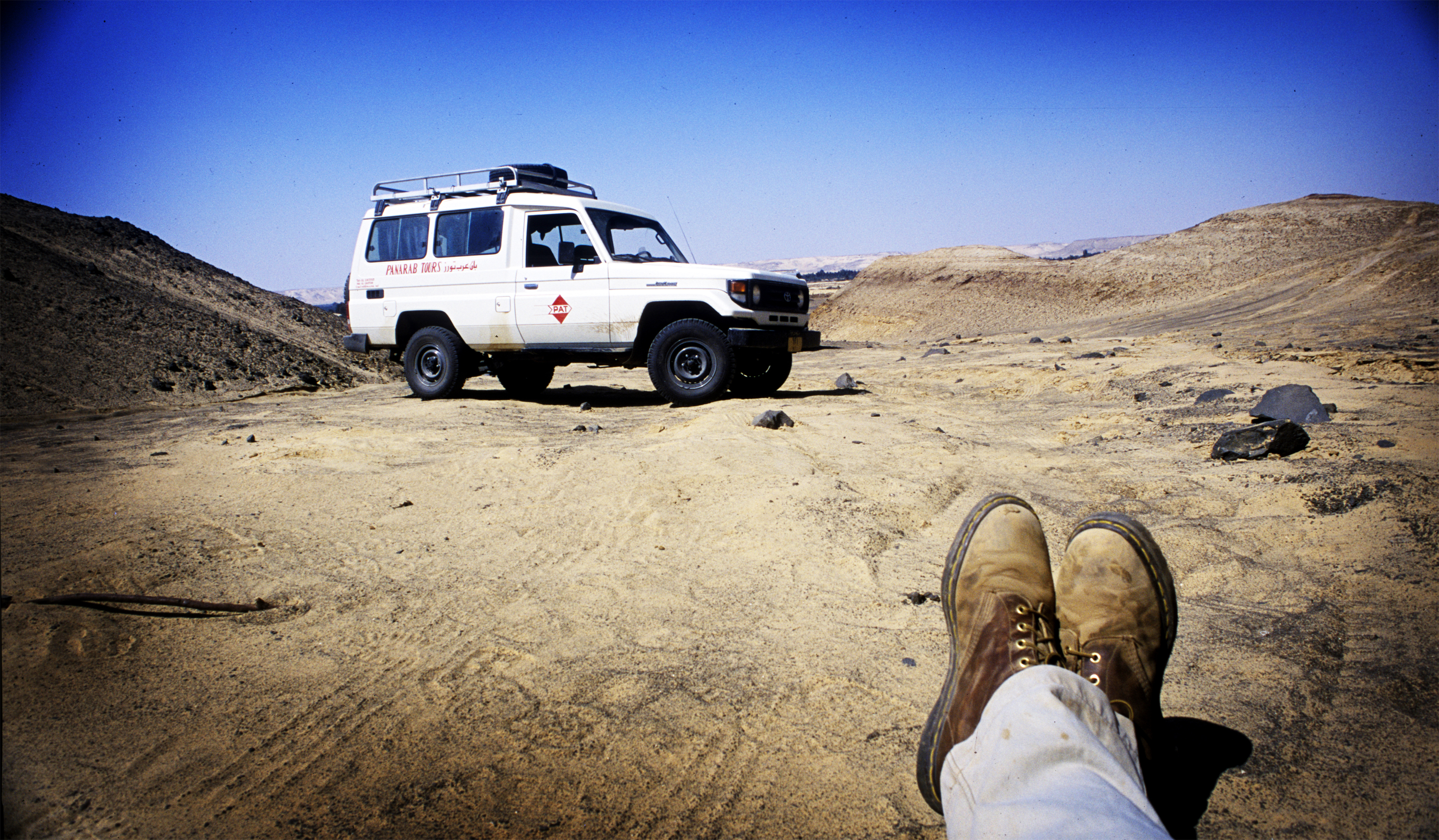
There is a great stillness in the sand and her sights and sounds are tastefully presented in an easy tempo to our senses. Long endless miles of sand dunes and scorching heat, this is the image one has in mind when one thinks of the Sahara.With the reputation for the hottest place on earth, temperatures can reaching up to 57.7 degree Celsius (135.8 degree F). Which makes working conditions uncomfortable and first degree buns common. I relished in shooting midday, capturing waves of heat rising from the scorching sand and apparitions of lakes beyond our reach. My camera would get so hot to the touch I’d soak my keffiyeh with water and wrap it around the camera to keep it cool. I learn to do this when I first came to the Sahara and rested my cheek on the side of the camera while looking through the viewfinder. My face burned with such intensity that for a couple of days I had one large red rosy cheek. From that first experience I learned to have long sleeve shirts, long pants, a hat and a keffiyeh in my kit.

Our bodies are about two thirds water and when we get dehydrated, it means that amount of water in our body has dropped below the level needed for normal body function. What is uncanny, is that it’s so hot sweat will evaporates before leaving a wet stain on clothing so drinking water at interval (even if you don’t feel thirty) is essential. Drinking to much water will washes away the electrolytes which is why I carry powder electrolyte supplements in my pack. In spite of all the discomfort the Sahara desert is my favorite place to work. The Sahara’s is one place on earth where all men become brothers to survive her embrace.
A silence so great that I can hear the earth breathing, I have found my Atlantis.
 Exposure and Other Worldly Morsels