“If you don’t know where you are going any road can take you there”
― Lewis Carroll, Alice in Wonderland
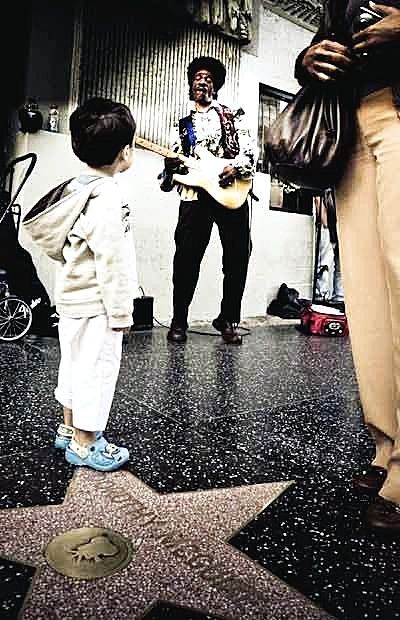
Away from the gaggle of tourist, there is a sweet spot just west of the of Grauman’s Chinese Theatre on the Hollywood Walk of Fame. There Anthony Aquarius pays tribute to Jimi Hendrix as he performs Jimi’s heartfelt song, The Wind Cries Mary. Busking on weekends, Anthony plays in the late afternoons with the expectation that the power of his music will move the out-of-towners for voluntary donations. Standing before Anthony a small child is taken captive by the power of the song as the currency of notes and lyrics floats off the polished Walk of Fame. Just out of frame Jesus is talking to Alice in WonderLand discussing methods of wooing tourist to have their photo taken with the guise of their character. Motionless, the young child is rooted to the pink terrazzo and bronze star of a bygone era actress Dorothy McGuire as Anthony’s guitar licks echo off the wall behind him and is suspended in time for only a moment. Anthony begins to sing
After all the jacks are in their boxes, and the clowns have all gone to bed, you can hear happiness staggering on down the street, footprints dress in red. And the wind whispers Mary.
Today weather forecast for Los Angeles, California. Near-record high temperatures were predicted for most coastal and valley locations through Friday. Santa Ana winds gusted across Southern California today with sweeping skies clear and raising fire concerns. Forecasters have not issue red flag warnings but did predict elevated to briefly critical fire weather conditions. Fires can spread easily under these conditions.
Here’s how it works. When heaven and purgatory collide over the Great Basin of California and Nevada, the upper atmospheric pressure is so great that cold air begins to sink violently downslope compressing with the warm air. The temperature rises, the relative humidity drops and birth is given to the Santa Ana winds. As the Santa Ana exhales across the barren land an invisible assault of unpredictable chaos ensues. Beneath a sun splash sky the searing dry winds descent upon the Southland. It is the “Season of Suicide’ as the onrush is channeled through the passes and canyons that surround the City of Angels. Descending pass the sage, red willows and prickly pear the veiled breath of the devil sears the stems, exposed roots and unfolding blooms. Parched ravines become arteries of frenetic winds fraught with sweltering heat and are escorted with manic depression and bizarre behavior to the lost souls below. The mind-altering impact on some unwitting citizens can be explained away with the alibi, “the devil made me do it”.
The winds create turbulence manifesting vertical wind shear, which litters the sky with plastic grocery bags, splintered Styrofoam and showering pieces of debris. The decibels intensifies mixing the wailing of the protagonist with the sounds of dismembered trees and wind gust that sound as if vast swarms of locust have arrived. A spark spawns Dante’s purgatory in paradise; sirens resonate across the Southland as the atmosphere is flushed with crimson and ash. The vast canvas of the South land is painted with a dry brush of heat, valley fever and paranoia as the Santa Ana takes to the red carpet in the city of Angels.
The hot easterly wind is properly and historically called: SANTANA, not Santa Ana! Sailors have a phrase, “Beware the devil wind Santana.” Refer to two years before The Mast, published in 1840, by Richard Henry Dana Jr. The original spelling of the of name of the winds is unclear, not to mention the origin. Although the winds have been commonly called Santa Ana Winds or Santa Anas, many argue that the original name is Santana Winds or Santanas. Both versions of the name have been used. The name Santana Winds is said to be traced to Spanish California when the winds were called Devil Winds due to their heat.The origin of Santa Ana Winds with an Associated Press correspondent stationed in Santa Ana who mistakenly began using Santa Ana Winds instead of Santana Winds in a 1901 dispatch. Be safe out there my friends.
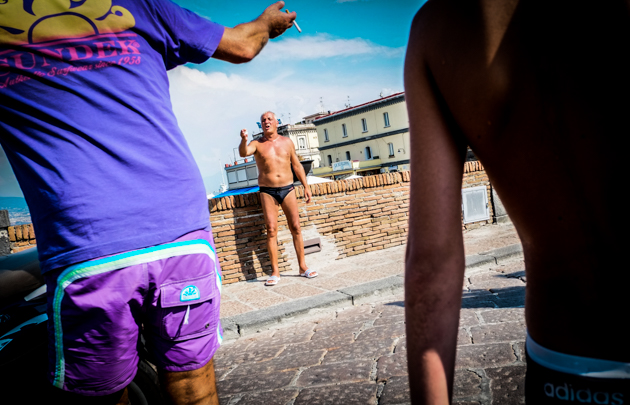
“I just really want to tell you right now Enzo, that it is extremely plausible that you have created your own world and the illusion is that you are a neurotic mess because your mother was a neurotic mess. You think to much and feel to little, now go home and eat some prosciutto, drink some vino and take a nap.”
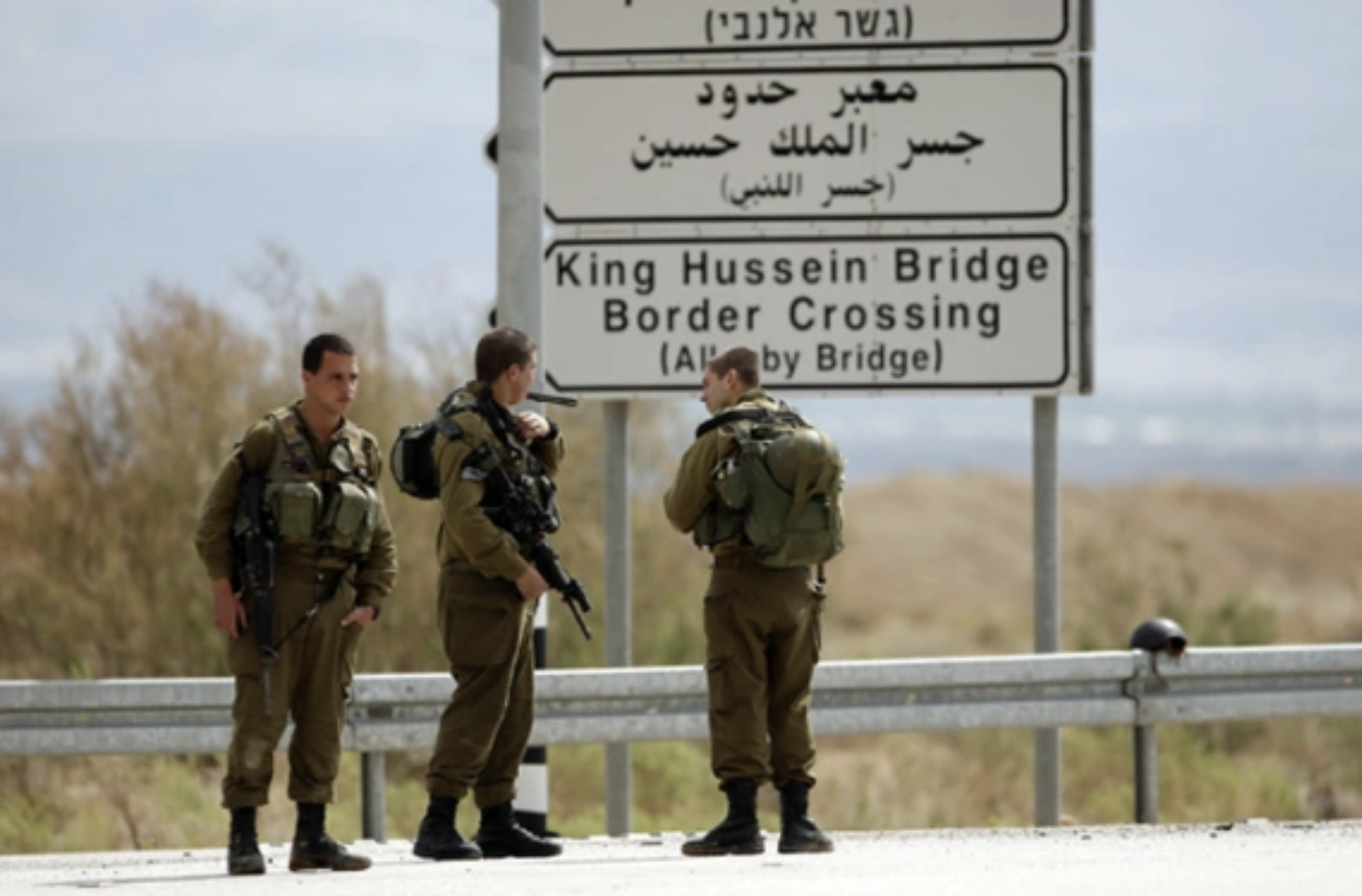
On a cool March morning before sunrise, we left the King David Hotel in Jerusalem and made our way to the Allenby/King Hussein Bridge to enter Jordan. The windows of our suburban were down, the cool desert breeze reviving those of us that did not get a full night’s sleep. We sat silently, lost in our own thoughts, as the rosy-pink morning sky brought a new day.
Mark sat up front, reading the day’s itinerary, as Shmuel Bernstein, our Israeli co-producer, drove; on reaching the border, Shmuel was not able to enter Jordan with us. Sitting next to me was Jim Glove, Associate Producer, whose responsibilities included keeping my blood sugar up, which explained the many protein Balance bars and Snickers bulging from his pockets.
We were as prepared as possible for a smooth shoot without incident or delay. In our arsenal, to ensure all went well, we had: an envelope of money for baksheesh, passports, visas, and our carnet for the camera gear. We had just one day to shoot the segment in Jordan and fortunately, Bethany Beyond the Jordan was about five to ten minutes from the Allenby/King Hussein Bridge. The border didn’t open until 8 a.m. for crossing and, as it is strongly suggested you arrive early, time was of the essence.
Once we crossed into Jordan, a Jordanian government official, two security men, a production assistant, a tourist bus and a driver were due to meet us. As we approached the border, the suburban suddenly filled with a very sweet fragrance; as we queued, several large trucks bearing mountains of oranges lined up beside us on their way to market in Amman. Waiting for the Israeli army to inspect each truck took hours and we could see our Jordanian officials waiting by a small bus, smoking cigarettes and drinking tea. We could do nothing but wait. We opened the back of the suburban and made coffee on a small stove, stealing oranges from the last truck for breakfast.
After two and a half hours we showed our visas and lugged cases of our gear for inspection. Finally, we crossed into Jordan and met our officials, handing over a little baksheesh. We continued to the archaeological site where we met Muhammad Waheeb. Muhammad was the lead archaeologist at all excavations carried out at Bethany Beyond the Jordan, which began in 1996. Jordan was attempting to follow Israel’s success in biblical archeology which became a major factor in their increased tourism. It’s believed that Jesus’ baptism took place on the Jordanian side of the Jordan River, at Wadi Al-Kharrar. This location was therefore touted to evangelical Christians looking to walk in the footsteps of Jesus.
Already three hours behind, we shot a seated interview with Mr. Waheeb then B-roll of the dig site: the Jordanian workmen, close-ups of their hands and shovels, the terrain, and a walkabout with Mr. Waheeb as he surveyed the excavation. We rushed to capture as much footage as we could before we left for the border which closed at midnight. And we needed to be there at least three hours before this, to unload all the gear for inspection and show our visas to the Palestinian Authority.
Despite getting some great footage, we felt that we were missing a key shot, that of Bethany by the Jordan and the Wadi Al-Kharrar riverbed. Mark, Jim and I went on the hunt, wandering down a makeshift path lined with an old wooden fence. We’d just passed some Jordanian workmen who were extending the dirt path through a dense thicket of bushes and shrubs when we stopped at what appeared to be a promising location. Beyond the fence, facing west into Israel, was an open field. Within this was a mound of earth that offered enough elevation to clearly see the east bank of the river.
‘Jim, you take the tripod. Mark, give me an extra camera battery and tape,’ I said.
I handed the camera to Mark as I hopped over the fence, Jim following me with the tripod. As we had little time left I forged ahead in a quick march, across the barren patch of earth. Mark stayed behind and sauntered back to the Jordanian workmen we’d passed to shoot more B-roll with his mini DV camera. Jim and I were near the mound when our attention was caught by the workmen. ‘Hey! Mr! Broom, Broom! Mr….Room!
‘Dave, what are they shouting about?’
‘I’m not sure,’ I said, confused. ‘Something about a broom.’
‘Why would we need brooms?’ Jim murmured.
Standing next to the shouting workmen Mark looked bewildered. He threw his arms up in an ‘I don’t know’ gesture.
‘Hey, Mark, what’s all the hoopla? What’s going on?’ I shouted.
‘I don’t know what they’re saying, guys. Something about a broom. Or a room…there’s a lot of commotion,’ Mark shouted back.
The workmen rushed to the fence, shouting, with Mark in tow. At that moment, storming down from the top of the trailhead, our short, squatty Jordanian escort – we called him Mr. Security – was running towards us, arms flailing and leaving a wake of dust.
‘Nooooooo!’ he yelled.
As Mr. Security got closer to Mark and the workmen I could see his round face was sweating profusely. There was a big, wet spot on the front of his shirt underneath his suit jacket.
Jim shouted, ‘Hey, guys, what’s going on?’
Mr. Security stepped up to the fence. Leaning as far forward as he could without losing his balance, he cupped his hands. In broken English, he yelled, ‘No, no! Stand still! That area has not yet been cleared of landmines.’
‘Oh, great!’ Mark shouted. ‘That’s just great! Jesussss!’
‘Dave, what did he say?’ Jim asked.
‘I think he said we’re in a landmine field that’s not been cleared. The Jordanian guys were saying ‘Boom, Boom’, not ‘Broom, Room’.’
‘Oh. Well, uh, what do you think?’
‘I think I would rather be at IHOP having pancakes,’ I sighed.
‘You know, I think that’s a good way to look at things. Let’s just relax and breathe in. Breathe out. Calm, calm, calm,’ suggested Jim, letting out a nervous chuckle.
He was about two meters behind me, with the tripod over his shoulder and Snickers bars in his pants. We both stood perfectly still, squarely balanced on both feet that were planted into the earth. The sun seemed suddenly hotter than it had been only moments ago and my grip on the camera had become more difficult as sweat ran down my arm. For a split second, I swore I could hear the ocean. Perhaps it was my mind playing tricks on me, in an attempt to take me away from reality. How we’d managed to get into such a scrape, I didn’t know; there’d been no signs and nothing had been mentioned about landmines.
‘Jim, I think I just threw up in my mouth.’
‘That’s got to be unpleasant. Do you have any gum?’
‘Yeah, somewhere.’ I paused a little before searching about my body.
After intensely focusing on the ground around us, I looked up at Jim. I could see he was also processing our situation.
‘Dave, did they say it hadn’t been cleared of landmines? Let’s think about it. They said ‘cleared of landmines’. Being this close to Bethany Beyond the Jordan, Elijah’s Hill and other archeological sites – not to mention this big push to bring in tourism – they may not know if landmines have recently been cleared. Just beyond that hill I can see the tops of willow trees, which means we’re very close to the Jordan river….’
‘I found the gum!’
‘What?’ Jim asked.
‘I found the gum.’
‘Oh, great, Dave. Can we just focus on this, please? I think, if we really focus on the ground, we should go for it.’
My ears suddenly snapped into action. ‘Elijah’s Hill? Isn’t that where Elijah’s ascension into heaven was in a whirlwind of dust, at the appearance of a chariot of fire?’
‘I’m not sure. But it sounds biblical. I’m trying to recall any movie I’ve seen where the characters are in a landmine field, and how they might have got out of it.’ Jim paused. ‘Hey! Do you remember the movie ‘Lethal Weapon 2’? Where Danny Glover is on a landmine? No, no, that’s not right….it was a toilet mine,’ he muttered.
‘Jesus, get real,’ I said. ‘It’s a ‘what would MacGyver do?’ issue. You know, I worked with Richard Dean Anderson on General Hospital back in the day, before he was MacGyver.’
‘Really? You never told me that,’ said Jim.
‘Yeah. We’d race wheelchairs across the studio between taping scenes, then sneak behind other actors and hang clothespins on the back of their clothes. We even pinned the executive producer, Gloria Monty.’
‘Dave, Dave…you’re rambling. I think I have cramp in my legs.’
‘Hey, Jim! How about we scoop up pebbles and toss them in-front of us?’
‘That’s a great idea. I wonder if that was ever used in a movie?’
With my feet firm, I bent down and gently scooped a pile of small stones and earth. ‘I’ll go first,’ I told Jim. Holding the camera in my right hand, I closed my eyes and threw the handful as hard as I could. There was no explosion.
Jim laughed. ‘You throw like a girl. Well, we’re almost at the bank of the Jordan. It’d make a great establishing shot.’
‘Yeah, I know,’ I said.
Despite the weight of the Betacam and the daypack full of batteries and tapes, balance became paramount. I leaned forward, ready to take a step. With each footstep the crunch of dry earth, dead roots and unusual lumps in the earth became potentially volatile underneath my boots. I stopped and turned to Jim. ‘Well? Should we keep going?’
‘Let’s go for it, Dave. Who knows, maybe the History Channel will do one of those screen credits: In memory of Dave Banks and Jim Glover, who made this program possible.’
‘I doubt they would. The History Channel’s like most networks – drowning in corporate culture and more interested in making money by selling commercial airtime than giving credit to anonymous producers like us on the front lines.’
Frenetically chewing my gum, I took another step, feeling every little step in the dry soil. Another step…nothing. Another step forward…nothing. Jim followed, placing his boots in my footprints. We reached the top of the mound.
‘Wow! We made it,’ said Jim.
‘Yeah, well, it’s not the best establishing shot, but it’ll do.’ I glanced back at the fence, where the workmen were squatting on the dirt path with their hands covering their ears, as was Mark and Mr. Security.
Really? You guys can’t have a little more faith that we’re going to get out of this?
Jim and I set up the tripod and shot the Wadi Al-Kharrar riverbed, zooming in and out of the Bethany Beyond the Jordan excavation and panning the horizon. ‘I think we’ve as much B-roll as we can get. You ready to head back?’ I said.
‘Before we do, let’s raise a toast with a Snickers bar,’ Jim said.
‘Good idea.’
We raised our Snickers to Mark and Mr. Security who had dropped their hands from their ears. The workmen had now turned their back to us, still with their fingers in their ears. Mark gave us two thumbs up and a smile. Jim and I were in no rush to dance our way back to the path. We slowly munched our creamy, nutty chocolate, stalling for time.
‘Have you ever eaten a frozen Snickers, Jim?’
‘Oh yeah. I love one on a hot day, especially after a run.’
‘You know, this isn’t the first time I’ve been in a landmine field,’ I said. ‘I had a shoot in Israel a couple of years back. I was shooting around Galilee in a field when the IDF drove up and told us, ‘Guys, this area hasn’t been cleared’. It appears that someone had actually taken down the warning signs. There was noindication of danger.’
‘Wow,’ said Jim.
‘I think we should walk backwards, placing our feet in the footprints we’ve already left. What do you think?’
‘Good idea. Let’s just take our time.’
‘Are you going to be able to keep your balance with the tripod on your shoulder?’ I asked.
‘Yeah, no problem,’ said Jim.
We had a plan but with much apprehension: moon-walking across a sterile field of earth that held Crackerjack-style surprises underneath. I turned my head, owl-like, and took my first steps, carefully placing my boots in the shallow imprints I’d left earlier that afternoon. Holding the camera in one hand and covering my crotch with the other, I continued backwards. Turning his head from side to side and keeping perfect balance with the tripod on his shoulder, Jim gingerly began his return to the fence.
Mark called out, ‘Just take your time. Don’t rush…you’re doing great, guys!’
Reaching the fence, we both gave a huge sigh of relief. It was obvious Mr. Security was very upset with us, he didn’t speak to Jim or me for the rest of the shoot. Mark slapped us on the back, pleased that body bags had not been necessary.
We loaded up the gear and traveled back to the Allenby/King Hussein Bridge, where Shmuel was waiting to take us back to the King David Hotel. Our Jordanian hosts were given a bonus in cash, as expected. We had nearly a week of shooting left in Israel – hopefully, without any further mishaps. Shmuel turned the radio off and the three of us, Mark, Jim and I, fell asleep.
I didn’t have a restful sleep that night with Bethany replaying in my dreams over and over again. I woke and remained tired, despite the many shots of espresso I’d downed. I moved more slowly and wasn’t as clear headed as usual. Hopefully, I’d tap into my enthusiasm at the Garden Tomb. It was an easy day of ‘talking head’ pieces. Stood in the hotel lobby, waiting to leave, there was a noticeable change in the atmosphere. It was then that I recognized a team of American Secret Service agents. They were trying to be inconspicuous in their dark suits, Secret Service lapel pins and sunglasses, doing reconnaissance.
I recalled that, before we’d departed for Israel, the shoot had nearly been cancelled by MPH Entertainment due to events of terrorism: suicide bombers, snipers and random shootings had killed 69 and left 292 civilians and IDF soldiers injured. MPH had had doubts about our safety but they were under a deadline with the History Channel. Time and money were at stake; regardless of safety, we had to feed the monster. At the last minute, Mark, Jim and I persuaded MPH to move forward with the production of ‘In the Footsteps of Jesus’.
On the drive to the Garden Tomb, the IDF and the Jerusalem police were out in force at every intersection of the city. Shmuel told us that Vice President Dick Cheney and General Anthony Zinni were both in Israel to meet with Israeli Prime Minister Ariel Sharon. Only the day before, a suicide bomber had detonated his bomb on a bus, killing 21 civilians, just minutes after we’d passed through the French Hill neighborhood, northeast of the city. No wonder security was at a heightened level with Cheney – whom we referred to as Darth Vader – and Zinni in town. In the Garden Tomb, across the Damascus Gate, we were ready to shoot interviews against a beautiful backdrop of cultivated English garden, with stone paths, flowers and towering pines. It was a peaceful atmosphere unlike the world outside the walls. The Garden Tomb was a favorite spot for Christian prayer and meditation, and a great location to conduct interviews with little external noise. Between interviews with Peter Wells, General Secretary of the Garden Tomb, and archaeologist Dr. Shimon Gibson, we shot B-roll of the skull-like feature on the adjacent hillside, which many Christians believe to be Golgotha, as described in the Bible. The Garden Tomb also showcased an ancient rock-cut tomb that had side by side chambers which most evangelical Christians believed was where Jesus was laid to rest before transcending to heaven. After the previous day’s experience, Jim and I felt we had a right to indulge ourselves: we took it in turns to lie on the stone benches to be ‘resurrected’.
It was late afternoon when we finished the last interview. We gathered up our gear and packed it away. It was our last day of shooting in Jerusalem. The next day would see us check out of the King David Hotel and travel to the northern shore of the Galilee.
We rushed to get back to review tapes, clean the gear, charge batteries, pack our clothes, have a sit-down dinner and maybe, just maybe, get at least six hours’ sleep. The gods, however, were not with us. There was congestion throughout Jerusalem with the universal middle finger salute given out like candy. Honking horns, shouts and security checks hailed us at every intersection leading back to the hotel. With traffic queues stretching before us we snacked on Balance bars, Three Musketeers’ chocolate bars, and Jelly Bellys – all of which only raised our impulsiveness, bravado and reckless behavior. We were only a few blocks away from the hotel and someone had to pee – I won’t mention any names. We started shouting from the back seat, daring Shmuel to hop lanes. There was no oncoming traffic.
‘Go for it, Shmuel! Go for it!’ we chanted. ‘Go, go, go, go!’
Shmuel looked into the rear-view mirror and gave us a ‘Clint Eastwood’ smirk. He glanced quickly in both directions then pulled the suburban into the opposite lane, making his way to the entrance of the King David Hotel. Driving up to the car port, we jumped out and started unloading our gear. We were met by a tall, red-headed Secret Service agent wearing Wayfarer sunglasses. He spoke into his sleeve. ‘Yeah, I got it.’ He then turned to us. ‘Hey! You guys can’t stop here. You have to move along.’
‘What? We have reservations here,’ Jim said.
‘Sorry, but you have to move, now! We’ve VIPs arriving in a minute and we need this area cleared of all traffic.’
Reloading the gear, we jumped back into the suburban. Shmuel told us that the hotel had a rich tradition of hosting royalty, celebrities and other international dignitaries on their visits to Jerusalem. We drove across the street to the most elegant YMCA I’d ever seen: it combined art deco, Byzantine and Islamic decorative styles, and it was surrounded by gardens – the Village People would have been proud. We sat in the parking lot, waiting for Cheney’s convoy to arrive while trying to remember the lyrics and gestures of ‘YMCA’.
Our attention was turned when a stream of black suburbans with flashing red lights came from our right. They made their way down David HaMelech Street, past Gozlan Garden. There were few privately owned suburbans in Israel, most were official Embassy vehicles; in particular, those of the US Embassy. Shmuel and his suburban were often mistaken as being part of the embassy which worked to his advantage sometimes. The motorcade passed by and, still on a sugar high, we started shouting at Shmuel. ‘Go for it, Shmuel! Go! Go, baby, go! Shmuel accelerated, making a small screeching sound in the parking lot, driving to the tail end of the convoy. We waited in line as dignitaries and security teams unloaded at the front entrance of the King David. More Israeli police came up behind us but we acted like any other official and took our turn to pull into the hotel carport. The red-headed agent we’d met earlier was not in sight so we quickly jumped out and pulled all our gear from the vehicle. Mark proceeded through the revolving glass door in a cadence of authority. Mark has that East Coast air about him and he dresses very similarly to a deputy director of the FBI. No one stopped him as he disappeared into the lobby.
As the rest of us unloaded a couple of agents surrounded our vehicle – not questioning us but looking out to the street for any unusual activity, in protection. I could only assume that they thought we were part of the envoy. We continued, unchallenged, into the hotel.
The lobby was decorated sumptuously and furnished with velvet couches, gold drapery and marble-topped tables, with a spectacular view of the Old City and Mount Zion. The Secret Service agents were sitting in over-stuffed chairs, their feet up on the coffee tables as they smoked cigars. They talked loudly, their bursts of laughter echoing off the marble floors and traveling down the halls. The staff of the King David tried to ignore the vocal Americans but you could read their thoughts when they glanced up, disdain on their faces for their ugly American guests. An agent near the elevators stopped me. ‘Hey, where’s your service pin? You know we’re on lock down.’ He was referring to the Secret Service lapel pin that gave them full access to roam about the hotel. ‘It’s, erm, in my bag upstairs,’ I said, showing him my room key.
‘You’d better wear it,’ he warned.
In our hotel rooms, Mark and Jim reviewed the footage while I cleaned our gear, packed, and charged the batteries. We ordered room service and discussed our itinerary for the following day’s trip to Galilee, hitting the sack around 3 a.m.
*****
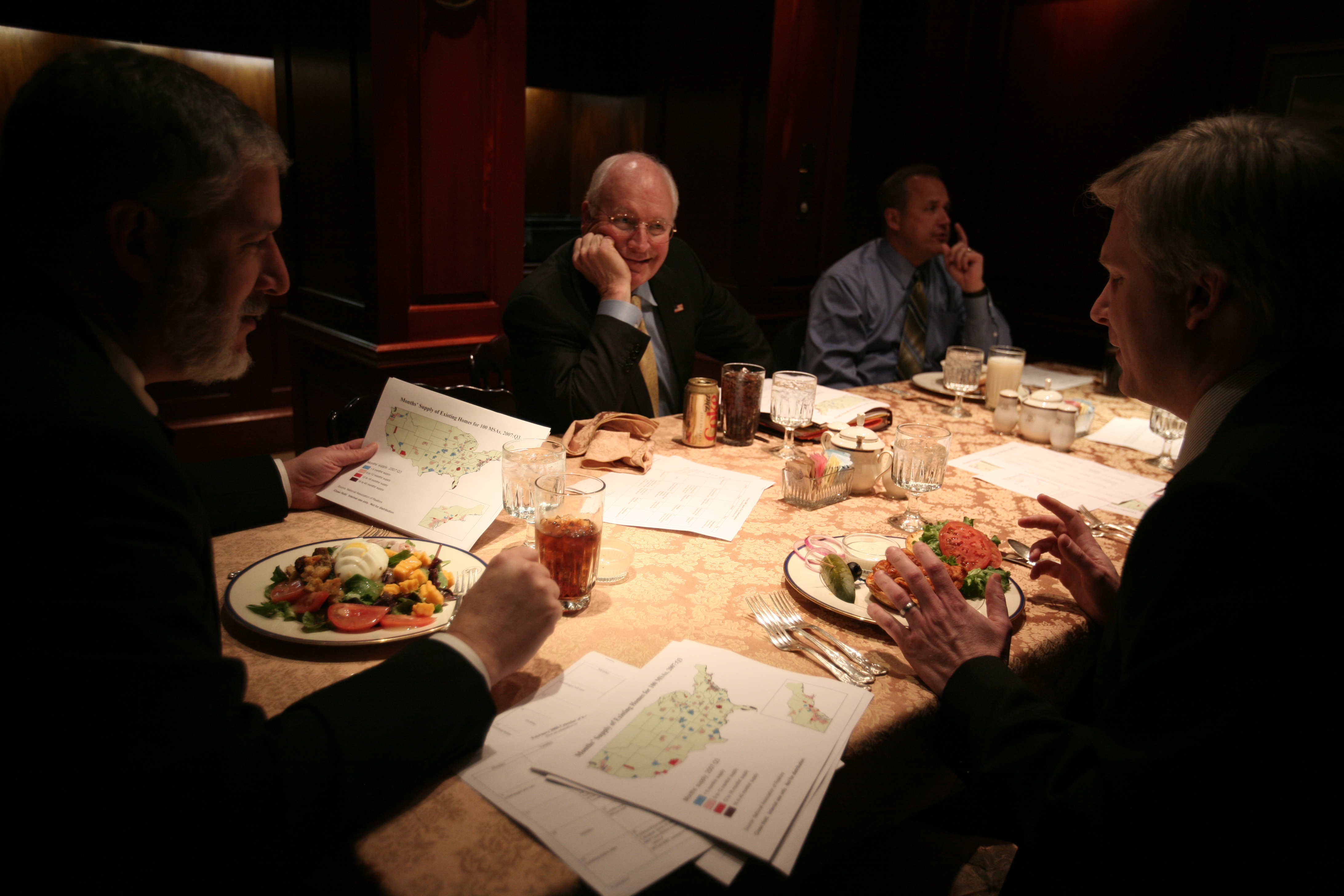
Vice President Dick Cheney was grinding his teeth, his head cocked to one side, as if to take aim at his plate of cantaloupe and assorted breakfast goodies. He bore an irritating smirk of satisfaction as he chomped down on the ripe pink flesh, all the while scanning the hotel’s elegant breakfast room. The room was incredibly quiet with just the occasional sound of silver spoons stirring within porcelain cups. At the entrance of the breakfast room, and at each exit, were dozens of dark-suited agents, their die-cast pins sat proudly on their lapels. Each agent had an earpiece with a clear acoustic tube that dropped down underneath their jacket collar.
.
Our table was directly adjacent to Cheney’s and, on occasion, we caught part of the staff briefing. Dick Cheney was smaller in person than his ominous persona on television, yet his 5 foot 8 frame seemed to tower over the table and his staff. There was a perpetual smugness on his upper lip that pulled to the left side of his round, meaty face. It must have been a bad day for the VP, his trademark scowl was present as he listened to the day’s agenda. We tried not to make eye contact with the agents or Darth Cheney, concentrating solely on eating our breakfasts. Eventually, we caught each other’s eyes and snickered, very much amused that however tight Cheney thought his convoy was, we’d breached it. We checked out of the King David without any problems, under the watchful eyes of the Secret Service. With Jerusalem behind us, we took our time, stopping along the way to shoot B-roll. We booked into a kibbutz at the end of the day and turned in early, eager to rise in time to shoot the sun rising over the Golan Height and Galilee. Nothing will ever top the filming of that beautiful morning at the shore of Galilee on what was our last day. With the camera on a tripod and locked off, I filmed the sunrise as it peeked over the Golan Heights. Gleaming, warm, amber rays reflected off the lapping waters of the Galilee and a new day was born. It was serene, and the closest thing to a spiritual moment that I’ve ever had in Israel.
The waterfowl resting on the gentle surface suddenly screeched off into the distance and tranquility disappeared. Two drunken Russians floated down the shoreline in large, black inner tubes, holding bottles of vodka and singing. It was 5:39 a.m. The moment could still have been salvaged if only the Russians had continued their journey out of frame. But it was not to be, the current halted their progress in the middle of my shot. I waited for half an hour as they smoked cigarettes, laughing loudly. Perhaps God was letting me know that He had a sense of humor? Or perhaps my spiritual moments are just different to those of other people….
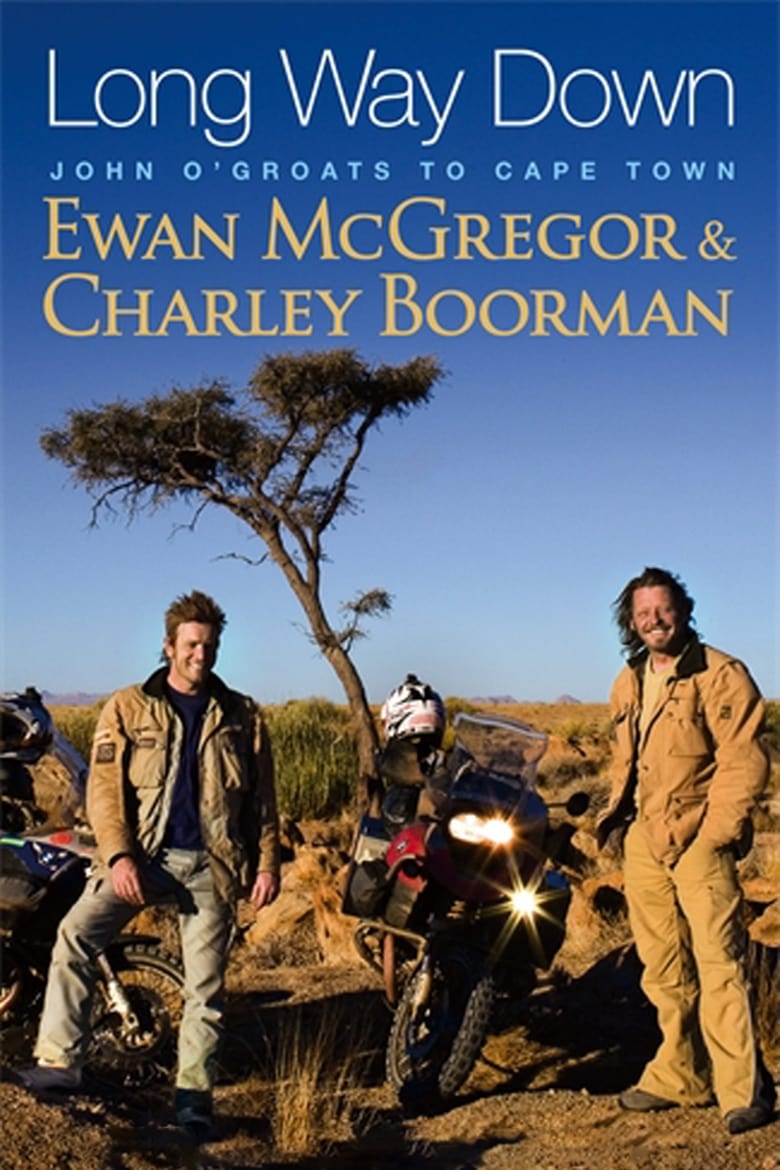
Eighteen countries, five shock absorbers, two bikers, and one amazing adventure…. That’s what the back cover of the book- Long Way Down – describe within its pages. This was an epic journey by Ewan McGregor and Charley Boorman across the continent of Africa on two BMW R1200GS Adventure motorcycles. The book was a good read and I am envious of their adventure. I owned a bike once. Well, not a bike but a scooter, a Vespa scooter. I was the big white guy on a Vespa scooter riding from Burbank through Griffith Park to Los Feliz on my way to work. And, I loved that little white Vespa, So, you can only imagine that while I was in Italy my love for the little Vespa was reignited. Vespa, in Italian means Wasp and true to its name and nature the Wasps are everywhere and going in every direction including the sidewalks. It is nothing to see a family of three on a Vespa or a woman on a cell phone smoking a cigarette with a baby strapped to her bosoms on the streets of Naples or Rome. The Vespa has it own filmgrpahy that goes from, “Quadrophenia” to “American Graffiti” and the most memorable of all “Roman Holiday”. For a scooter that was intended primarily to solve the problems of urban and intercity traffic the Vespa has a rich history of adventures. In 1997 journalist Giorgio Bettinelli started out from Chile, reaching Tasmania after three years and 150,000 km on his Vespa across the Americas. Bettinelli continued his adventure to Siberia, Europe, Africa, Asia and Oceania. All in all, Bettinelli has travelled 254,000 km on a Vespa. Pierre Delliere, Sergeant in the French Air Force, reached Saigon in 51 days from Paris, going through Afghanistan. Few know that in 1980 two Vespa’s ridden by M. Simonot and B. Tcherniawsky reached the finishing line of the second Paris-Dakar rally.What do you think about that Mr. McGregor and Mr. Boorman ?
For those who have not experienced the backs streets of Naples on a Vespa. Compliments of my Italian brother Vittorio and myself.
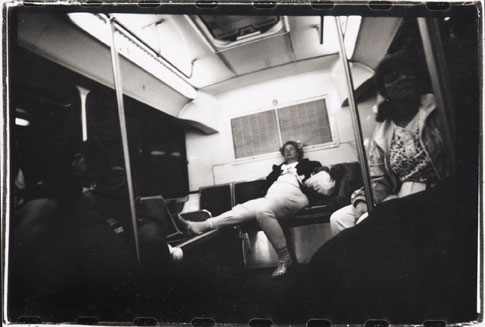
Asleep and protected from the desert heat and drunk predators, Donna finds refuge on a city bus in Las Vegas. She wears gold shoes with a white jump suit that is divided by a belt with sea shells glued to it. Donna’s hair is resting on the top of her head with a gold comb parked in front. She has grown accustom of sleeping over the sound of the diesel engine, air brakes and the frequent stops. Her head rolls from side to side with every turn the bus makes as it travels the back streets of Las Vegas. At first glance, Donna looks as if she has been shopping but the plastic bags are full of clothing and personal hygiene items which props her up right to a vertical sleep. The bags are her only worldly possessions.
A black man sitting next to Donna stares out the window to the lights of the casinos and hotels. He clutches a paper bag. He has no rings on his fingers or a watch on his wrist. His attention is focused on the world outside the window. Here, they are both protected from the elements of Las Vegas and lost in their own world.
It’s not that I’m a snob about music but any world traveler will tell you that one of the most essential items in your rucksack is your music. My choice of tunes has become the soundtrack for many of my journeys, often saving my sanity. I can attest that there is nothing better then listening to your iPod on a transatlantic flight, it evokes a wonderful state of being that takes you away from the crying babies and exasperated mothers. Music has protected me from exasperation when Egyptian wedding parties have still been going strong at two o’clock in the morning, as well as helping me pass days (not hours) while once waiting for a flight out of Kabul.
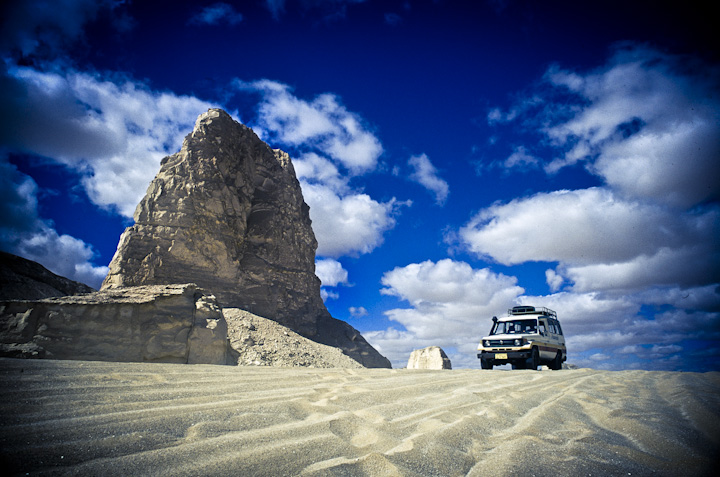
For me, Justin Bieber’s mindless pop just doesn’t lend itself to the experience of tearing across sun-bleached sands in the Sahara desert in a Toyota Land Cruiser. The Clash’s ‘Rock the Casbah’, however, does a terrific job and always sets the mood. I have collected CDs from souks, bazaars, back alley kiosks and hotel lobbies; I’d like to think that, as a result, my taste in music is eclectic. You’ll find Middle Eastern dance, Bollywood, Japanese pop, electronica, soul, rock, tango and Neapolitan ballads on my iPod.
Like a still image, a song can transport you back to a moment in time that has been forgotten: a cognitive process that scientists have tried to understand for a long time. For instance, during the wild fires of southern California in 2009 I had a very real flashback when Shakira’s song ‘Whenever, Wherever’ blared out from the radio while I was driving along the Glendale freeway. Combined with the sight of the burning hillside, the fumes of diesel and the ‘thump, thump, thumping’ of the helicopters overhead I was immediately transported back to the Bagram airbase in Afghanistan.
I see music as a synthetic acid that enhances flashbacks of our memories. Scans of the brain have shown that when people listen to music, virtually every neuron becomes more active, which may explain how I’ve overcome a learning disability, dyslexia and attention deficit disorder. Music forces me to focus, which keeps my ADD at bay. Growing up, my parents could never understand why I would play music when reading or studying; they’d just shout at me to turn the record player or radio off.
Once I sit down and play my music I fall into a Zen-like state; my brain slows down to a crawl so that I can concentrate. If it were not for music I would probably be selling used furniture in Tulsa, Oklahoma.
In all societies – with the exception of just one, that I know of: the Taliban – music’s primary function is collective and communal, to bring and bind people together through singing and dancing, should their culture allow. Humans have been making music since those first cavemen’s campfires.
To celebrate my host’s and his son’s newfound freedom we played ‘Jump Around’ by House of Pain on his chrome-trimmed ghetto blaster that he’d kept hidden from the Taliban. It must have been very amusing for the ISAF (International Security Assistance Force) troops to see a couple of Afghans and one big white guy jumping to the beat of the music in front of the old carpet store. To this day, when I hear ‘Jump Around’ I can smell the pilaf cooking, feel the heat of the day and, in my mind’s eye, see the physical expression of freedom on the owner’s face and that of his son’s, as they danced with sheer joy.
Prior to a shoot in Egypt I listened to singer Amr Diab which gave me some insight into modern Egyptians’ taste and a clever way to win over friends. I phonetically learned Amr Diab’s hit ‘Nour El Ain – Habiby’. Arabic was not a language I grasped quickly; I know a few phrases like ‘tiizak hamra’: ‘Your ass is red’ (i.e. like a monkey’s); or ‘moxxu gazma’: ‘His mind is (as low and dirty as) a shoe’, a bitter insult. Still, I persevered and mimicked ‘Habiby’ before leaving the States.
Once we landed in Cairo we immediately started shooting. On a production like that there’s not much time to build a friendly relationship with your Egyptian fixer, crew members or driver. Despite the language barrier, we were all very courteous to each other and worked together really well. On day four of the assignment, we were travelling from Cairo to Giza by van; Abubak, our driver, pulled a cassette tape from a black box that he was very protective of, because it contained his personal collection of music. I was in the back of the van as the Egyptian crew sat up front, smoking Cleopatra cigarettes. The intro began to ring out and I felt butterflies in my stomach. Amr Diab sang the first lyric. I stood-up (as much as I could in the van) and belted out, ‘Habibi ya nour el-ain, ya sakin khayali, a’ashek bakali sneen wala ghayrak bibali (translation: My darling, you are the glow in my eyes, you live in my imagination, I adored you for years, no one else is in my mind). I then sang the chorus: ‘Habibi, Habibi, Habibi ya nour el-ain’ (My darling, my darling, my darling glow in my eyes).
I swear to God, one of the crew member’s cigarette dropped out of his mouth, and I could also see in the rear view mirror Abubak’s eyes widen – he nearly rear-ended the Cairo taxi in front. There was a moment of shocked silence – this big white guy from California was singing one of their most popular songs. They began to clap in unison to the beat of the song; one by one they stood up and held their hands high, swaying their hips, as we all sang ‘Habibi, Habibi’. The remaining seven days of our shoot were flawless. Every evening we came together and smoked shisha, played dominos and learned curse words in each other’s language. At the end of the shoot, and before checking in for the flight back to the States, we all stood in the Cairo International Airport parking lot to say our goodbyes and so I could pass out their payment and traditional bonuses. I noticed Abubak walk from the cab of his van with something wrapped in newspaper. He presented me with a gift: my very own hookah and shisha. Surrounded by the Egyptian crew, tears filled my eyes as I accepted their gracious offering. We’d become as close as brothers through our common love of music. As we said our goodbyes I couldn’t hold it in any longer and I openly sobbed as I hugged each of the big, burly, bearded men. They, too, began to weep as I walked away and boarded my flight.
I missed out on securing a bulkhead seat in coach and found myself wedged in a middle seat at the back of the plane. The seat had only enough space for a tiny derriere, which I don’t have – I swear, my toilet seat back home in Burbank was bigger. My legs were cramped up against the gray folding tray hanging from the seat in-front of me that refused to stay up, which seems to happen on every overseas flight I take. I should file a report to Amnesty International that United Airlines commits acts of torture by kneecapping captive consumers.
The in-flight movie was one I’d seen before: a chick movie, ‘Sleepless in Seattle’. It was time to escape into my world. I settled myself as much as I could by placing a pillow between my knees and the seat in-front of me. With my earplugs in and my iPod tuned to my favorite artist, Natacha Atlas, I opened a dog-eared page of my book: The Teachings of Don Juan, by Carlos Castaneda. Having lived in the Sonoran desert of the American southwest, and after working in the Sahara desert, I have an affinity with space, sand and time. As an anthropologist, Castaneda wrote that Don Juan Matus, a Yaqui Indian and shaman, was an expert in the cultivation and use of various psychotropic plants, (specifically, magic mushrooms, angel’s trumpet and peyote) all found in the Mexican deserts. While under their influence, Castaneda reached a transcendental state. At cruising altitude, with the monotone whine of the jet engines and the murmurs of fellow passengers, Natacha’s song, ‘Ya Weledy (My Child)’ began and I hoped to gain similar escapism. The music then turned to an Arab symphony; in my mind a curtain rose and I played back the last few days with my Egyptian friends as Natacha sung: ‘Don’t forget your friends, don’t forget your friends. And those who think of you, and those who think of you, you don’t know what is in front of you. Don’t stray from the path.’
My own hypnotic drug – my music – was starting to kick in and I felt serenity, wedged inside my seat miles from the ground, incarcerated in a metal box. The track changed to Anthony Newley’s ‘What kind of fool am I?’ and I had a vivid flashback of my friend, Ya’akov, whom I worked with in Israel as we searched for a money shot….
*****
The passenger window next to me was tinted yellow from years of exposure to cigarette smoke. Running down the middle of the window was a vertical crack in the shape of lightning; it was stuck halfway which allowed a blast of hot air to penetrate the cab, bringing with it familiar smells of diesel and earth. As the terrain charged by, I idly wondered which biblical figures had walked this ground, and which battles from the Old Testament had been fought there. But it was difficult to ponder such searching questions when my Israeli driver, Ya’akov’s, radio-cassette player screamed ‘What kind of fool am I?’
With both hands on the wheel, and an ever-present Marlboro dangling from his lips, Ya’akov belted out the tune, over-enunciating each lyric. A man of small stature, Ya’akov was built like a brick house, with hands like baseball gloves and eyes blue and clear.
For some, pop music is considered to be the demise of civilization but for Ya’akov, it was a blessing. Ya’akov embraced western culture by teaching himself English from the Billboard’s Hot 100 music chart – it was the reason why he strained so hard to pronounce each lyric. Although his accent was definitely Israeli, it switched to a bad Elvis impersonation when he cursed aloud, such as when the undercarriage of his truck scraped the limestone rocks in the road. He also had difficulty with slang, such as when we referred to the ‘walkie talkies’ we used on location. He called them ‘okie dokies’. So used to his description, I still find myself calling them ‘okie dokies’ even now.
Ya’akov relayed his military service history during our trip. He was a veteran of the Six-Day War and witnessed Israel’s history from the front lines. He added that the Beatles released ‘Sgt. Pepper’s Lonely Hearts Club Band’ only days before the battle. He especially liked ‘When I’m 64’.
It was May 1967 when the Egyptian president, Gamal Abdel Nasser, expelled the United Nations’ Emergency Force from the Sinai Peninsula, including the Suez Canal. Egypt subsequently blockaded Israel’s southern ports of Eilat and the Gulf of Aqaba, preventing shipments of Israel’s oil imports. Nasser also had a strategic alliance with Jordan and Syria, with additional military support from Iraq, Saudi Arabia, Sudan, Tunisia, Morocco and Algeria. Egypt had amassed a thousand tanks and nearly a hundred-thousand soldiers on the Israeli border. On June 5, 1967, Israel launched a pre-emptive attack against Egypt. Ariel Sharon commanded the most powerful armored division on the Sinai front, which Ya’akov’s unit was part of. Ya’akov, a machine-gunner, fought in that battle, but not before his unit was held back due to landmines and Egyptian tanks. I can only imagine that while he waited for the orders to move out, Ya’akov was drinking coffee, smoking cigarettes and hoping to make it to 64.
General Sharon broke away from his plan of attack and ordered his troops to follow a camel path through the sand dunes, thus avoiding thousands of landmines and with the intention of surprising the Egyptians. Ya’akov was happy to have just survived the war. He now drove film crews around Israel and sold cartons of Marlboros to the Bedouins.
We were on an old dirt road, somewhere off Highway 79, near Nazareth. Ya’akov maneuvered around bombshell-size potholes; his truck, filled with our camera gear, swayed almost rhythmically to the cassette player. The goal was to find an appropriate filming location in the Israeli outback, one without power lines or any evidence of the twenty-first century. I let my driver – and serendipity – find the money shot.
The first time ‘happy chance’ occurred was when I shot a documentary about the Dead Sea Scrolls. We’d traveled to the cave in Qumran where the scrolls were found by a Bedouin shepherd in 1947. With that segment of the documentary done, and with no further obligations, I put my headphones on and succumbed to Esquivel (which is great travel music). I let fate and inevitability take us down unmarked dirt roads. Hidden away were miles of beautiful, sweeping terrain, perfect for shooting stills and B-roll for the documentary. Since that shoot it has become a ritual to wander aimlessly about our location.
True to this tradition, Ya’akov found a spot and pulled over. He got out a small backpack stove and proceeded to make us coffee. We sat on the back tailgate, smoking cigarettes and stirring our thick, black coffee.
‘Ya’akov,’ I said.
‘Yes, David?’
‘How about another song?’
Without blinking, Ya’akov bellowed, ‘In-a-gadda-da-vida, honey, don’t you know that I love you? In-a-gadda-da-vida, baby, don’t you know that I’ll always be true?’
As he stood in the middle of the old dirt road in the outback of Israel, Ya’akov mimicked playing a Vox organ in D-minor while belting out his tune. ‘Jesus,’ I thought, as I recognized the melody by Iron Butterfly. And then it hit me: the song came out in May of ‘68, right after the dust settled from the Six Day War – around the time Ya’akov started learning English.
As the sun set and Ya’akov rolled out the hits, there was nowhere I would rather have been. I shouted out, ‘Hey, Ya’akov…hand me your okie dokie. I’ll charge it for you.’
I was in seat number 33E, center aisle, in coach. Brown and yellow stains covered my seat and the tray table hung from a hinge so damaged that I had to prop it up with my left knee. I tried not to make eye contact with a frustrated mother who was stood in the aisle with her crying baby – her submissive husband in standby mode with the baby’s formula bottle in one hand and a clean diaper in the other. The poor man exemplified Henry David Thoreau’s quote: ‘The mass of men lead lives of quiet desperation’. A renegade four-year-old weaved through the cabin and ‘tagged’ an elderly Hasidic man who was praying next to the emergency exit. I just prayed that my iPod wouldn’t die and that the Ambien would soon kick in.
Our flight from Los Angeles to Tel Aviv was a long sixteen hours. My in-flight entertainment was watching a live performance of Jewish cultural and family dynamics. There was some English spoken on the plane but mostly, a mix of Hebrew and Yiddish filled the stuffy air. The guy on my right was reading The Jewish Daily Forward newspaper and drinking a Sprite. To my left, and fast asleep, was a Teletubby of a man, whose yarmulke had slipped down to his forehead and who, on occasion, snorted like a hog. On my iPod, my Natacha Atlas remix played. Eventually, I entered the ‘twilight zone’ when the Ambien finally took effect.
As we approached Jerusalem on Highway One from Tel Aviv we could see the city lights reflecting off low-lying clouds. The first time I’d set eyes on Jerusalem was several years previously: it had been a clear night under a full May moon. The limestone walls of the Old City had been awash with blue moonlight and the air had been completely still, and uncomfortably humid. Klezmer music played on the car radio, which seemed appropriate as the streets pulsated with trucks, cars, city buses and pedestrians dodging traffic. Everyone seemed to be in a hurry with their cell phones attached to their ears.
On this visit, however, there was no moon. Jerusalem was quiet and room service was closed. I lay on the bed munching a Balance bar, stretching my legs and back when the peaceful night vanished with the screech of tires and a ‘Whoosh!’
Below my balcony, on Aharon Katsir Street, a van was on fire. I grabbed my Nikon and got a few shots of the van just as one of the back tires exploded from the heat of the fire. In the distance I could hear sirens as I watched the driver run and disappear into the night.
What if the van’s full of explosives and I’ve just watched the driver run away? The Hyatt Regency is full of tourists and here I am, on the balcony, shooting stills – the only thing left of me will be ash, meat and a Nikon F3T!
But that train of thought wouldn’t lead to the money shot, so I kept shooting until I heard chatter from a walkie-talkie above me, on the roof.
Looking up, I could make out the silhouette of an armed guard and the barrel of his Uzi submachine gun. He was dressed like a Ninja, all in black, and wore a balaclava. His conversation was in Hebrew but there was no alarm in the Ninja’s voice. The Israeli fire department arrived, as did the police. They were in the process of putting out the van’s fire when the potential terrorist returned to the scene, showing the police his driver’s license and some papers.
When I share this story of the would-be Jihadist and the van on fire, people often ask me, ‘Aren’t you afraid when you go to Israel or the Middle East?’
‘I’m always very comfortable in Israel,’ I reply. ‘Besides, everyone carries a gun. But what does it say about your faith if you’re afraid to go where Jesus walked?’ Without a beat, I continue, ‘Quite honestly, I’m more fearful of going into a 7-Eleven in L.A. at midnight and getting shot, than I am about getting blown up in the Middle East.’
The fire of the van had been extinguished so the Israeli fire department left with the police. I watched the driver of the van hail a cab; the show over, I jumped in the shower before falling into a deep sleep.
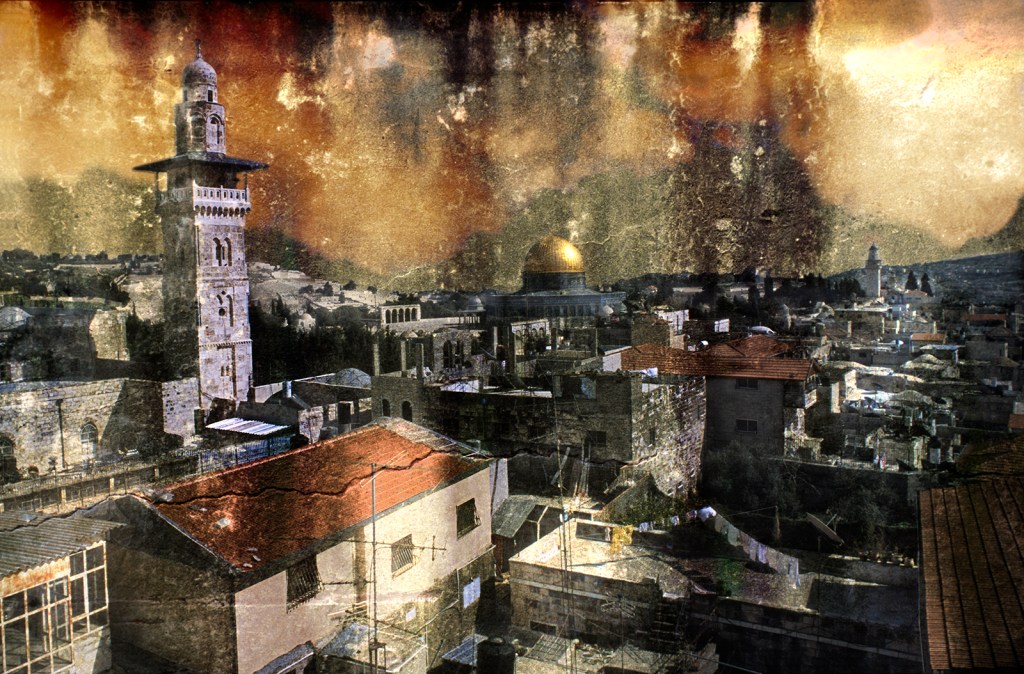
I woke to the loud chirping of sparrows. The morning sun presented a new day as I walked out onto the balcony to greet it. Below me, the blackened shell of the van sat desolately. I looked beyond its charred skeleton to the Old City of Jerusalem, surrounded by its stone walls and the Damascus and Jaffa Gates. It was hard to imagine that within those walls so much bloodshed had taken place, given that it spanned only 220 acres. Jerusalem, for me, was the Disneyland of the world’s most sacred sites: the Temple Mount, the Western Wall, the Church of the Holy Sepulcher, and the Dome of the Rock. In spite of the many solar panels, satellite dishes and electrical wires cluttering up my eye-line, I could still imagine what the Old City of Jerusalem looked like five hundred years ago.
Our plan was to start filming at the Christian Quarter’s entrance of the Jaffa Gate, on the west side of the Old City. We would then shoot still images and slices of life throughout the Jewish Quarter before finally moving on to the Muslim Quarter. At that point, we planned to double back and follow the Fourteen Stations of the Cross of the Via Dolorosa, which would lead us to the Church of the Holy Sepulchre in the Christian Quarter. The end of the day would be spent in the Armenian Quarter. With that in mind, I grabbed the Betacam, my Nikon camera, Sony Discman and a day-pack full of camera batteries and tapes, before heading out.
Jerusalem is a rich source of content for television news pieces and documentaries, as part of secular or religious programming – both of which keep me employed. The entire country of Israel is a treasure trove of archeological digs, ancient tombs, artifacts, current affairs and war. Standing at the Jaffa Gate, I watched a young American man preparing to perform and sing at the entrance to the Old City. He had a small consumer camera on a tripod and a silver, portable radio-cassette player. His blonde hair was coiffured within an inch of its life and didn’t move even when the breeze picked up. He was wearing a light blue polo shirt, khaki pants and penny loafers: the unofficial ‘uniform’ of most young evangelical Christian men in America. He held a microphone that wasn’t connected to anything and asked a fellow tourist if they would hit ‘record’ on his camera and ‘play’ on his cassette recorder. As a disco beat rang out, the young man raised a clenched fist, his index finger pointed to the heavens; with his fake microphone in the other hand he began lip-syncing to the music. ‘We were lost sheep in a dark, dark valley. Lost, lost, lost.’
During the chorus he danced. ‘He’s obviously not a Southern Baptist,’ I thought, recalling the old joke: ‘Do you know why Southern Baptists don’t believe in sex? Because it may lead them to dancing…..’
As the music built in tempo he was completely absorbed, twirling and bouncing around like Zebedee. Behind him, an old Palestinian man in a gray suit who’d been watching began mimicking the dancing Christian, nearly tripping over his own feet. Standing to the right of the Jaffa Gate, three young, female Israeli soldiers smoked cigarettes and giggled at the impromptu performance. Tourists stopped to take photographs before continuing their pilgrimage into the Holy City. The Palestinian circled the young Christian – now aware of his new backing dancer – upstaging his performance. Jockeying for pole position, the old man moved towards the camera. The young Christian tried to put his arm around his waist but the old man wasn’t having any of it. He pulled away, and when only inches from the lens of the camera, he shouted: ‘God is great! I love America! I love hamburgers!’
Upset, the young American stopped his performance. With his arms at his side he watched the old man praise America as the music played on. The Israeli soldiers, having enjoyed their unscripted reality show, turned towards the city to start their patrol. I tagged along behind them, past the Tower of David and into the Jewish Quarter.
Before entering the quarter I put on my Discman’s headphones and listened to my music which cut out external noise and distractions, thus helping me to focus on the rhythm of life inside the ancient walls. It’s amazing what you see when you’re immersed in music; it’s like your senses are heightened to compensate for the workout your ears receive. Sights and smells are more vivid and the trance-like calm I felt delivered a lucidity I couldn’t tap in to when people’s shouts and blaring car horns drilled into my skull.
Track one, Jethro Tull’s ‘Living in the past’; ‘How appropriate,’ I thought, as I entered the bleached limestone homes and shops of the Jewish Quarter. It was spotlessly clean with pretty flower boxes and blue-and-white Israeli flags. Orthodox men wore black hats and coats; they rushed around as young Israeli soldiers stood sentry at every corner. Entering the vast space of the Western Wall Plaza, men prayed to the left while women prayed to the right of the huge stone structure, the retaining wall of the Dome of the Rock. A large group of American Christian pilgrims were stood in the middle of the plaza photographing each other with the Western Wall behind them. As they waved into the camera, Jewish men dodged and ducked around the group, covering their faces so that they weren’t also photographed. I heard one of the Christian women ask her tour guide, ‘Where can I get an iced tea, dear?’
I passed a contingent of Israeli soldiers at the entrance to the Muslim Quarter. Unlike the sterile antiseptic Jewish Quarter, the aroma of grilled onions, spices and garbage filled the narrow stone walkway. Vibrant, noisy, crowded and intriguing, the Muslim Quarter is the poorest neighborhood of the four quarters. Darkened from age and smog, the limestone walls were covered in green, red and blue graffiti. I stopped to film children playing in the ancient streets and spotted an old man sitting on some alley steps, counting the ninety-nine names of Allah with his prayer beads. A young coffee vendor approached, wearing a Manchester United football jersey. He offered me a shot glass full of coffee which I accepted. ‘Shukran,’ I said.
‘Afwan,’ he replied. ‘Would you like to sit down?’
‘I would love to, but I’ve work to do. May I come back and join you for coffee?’
‘Of course, of course, my friend,’ he said.
At that moment, one of many self-appointed Palestinian tour guides in Jerusalem interrupted our conversation. ‘Mr. TV, you need me to get you in the Dome of the Rock. I know people. No problem, no problem. Come, it’s easy, Mr. TV.’
In Arabic, the young vendor started scolding the tour guide for his intrusion; their voices rose and spit flew through the air. Caught off guard, I stepped back as the veins in the tour guide’s neck began to enlarge.
Shit! I should be filming this.
I brought the Betacam to my shoulder, but the argument was done. The tour guide stormed off but not before he’d jabbed his finger at me and shouted, ‘May your children cheat you!’
I continued my hunt for the money shot through the ancient labyrinthine streets and alleys, amongst Jews, Christians and Arabs wearing variations of their traditional dress. Although I was surprised, others appeared unperturbed as a Christian pilgrim passed, wearing shorts and carrying a seven foot wooden cross with a wheel attached to its base. Two nuns shopped for pastries and four Muslim women pointed at a shop window, discussing which of the mannequins’ hijabs they preferred. The volume of banter from the local merchants as shoppers haggled only added to the bustling atmosphere, the smell of deep fried falafel deeply ingrained. Symbolic of a country with bipolar disorder, one nearby kiosk sold the CDs of American, European and Arab artists along with T-shirts bearing the Israeli air force emblems and prints such as ‘Free Palestine!’, Sylvester Stallone as Rambo, images of Yasser Arafat and Che Guevara.
‘Mr. Mr….my friend, you come into my shop, please? Are you an American?’
In my best Barry White voice, I replied, ‘No, no, I’m Klingon.’
‘Oh, that’s okay. I take that money too.’
The Muslim Quarter overflowed with pure capitalism. I continued through the souks, occasionally stopping on Via Dolorosa, shooting video and still images of Christian pilgrims, IDG (Israeli Defense Force) soldiers and Muslims on their way to prayer. At Station Three, I found a multitude of Korean pilgrims with point-and-shoot cameras, all wearing the same bright yellow hats. They followed a guide waving a bright yellow flag as he spoke through a mini bullhorn. I swear I saw the same group of Korean pilgrims in Rome two months before. Those yellow-hat-wearing pilgrims – and the group of red-hat-wearing Italian pilgrims right behind them – were on a very tight schedule. I decided to wait them out at a nearby sidewalk café and enjoy a cup of tea, a ‘kanafeh’ and a smoke. As the mass of pilgrims finally passed, I noticed a tourist on the corner babbling prophecies with tears in his eyes. This wasn’t an unusual sight in Old Jerusalem: devout Christian pilgrims got quite emotional when walking in the footsteps of Jesus.
The ones you’ve to watch are the seemingly normal Christian pilgrims who suddenly become ‘inspired’. They shed their normal clothes and transform into biblical characters, garbed in nothing more than a toga made from their hotel’s bed sheets. We call this ‘Jerusalem Syndrome’ and I wondered which of the biblical prophets the man opposite would become. Usually, it’s Moses, John the Baptist or Jesus Christ himself.
I’ve yet to find the woman who truly thinks she’s the Virgin Mary. It’s said that she walks the Via Dolorosa every day to the Church of the Holy Sepulcher to sob at the altar of Golgotha, mourning the death of her son, Jesus. She may sound far removed from reality but there is another ‘Virgin Mary’ – she invited everyone to her son, Jesus’, birthday party in Bethlehem.
There’s a joke in psychiatry that if you talk to God, it’s called prayer, but if God talks to you, you’re nuts. There seemed a disproportionate number of those who contracted Jerusalem Syndrome that were American Evangelical Christians, though there have been reports of deeply religious Jews – and, in rare cases, Catholics – also contracting this strange affliction. Peak seasons are Easter, Passover and Christmas.
Over the years, Israeli police have come across multiple biblical characters running around in bed sheets and even goatskins, proselytizing to the citizens of Jerusalem. Tour guides are asked by the Jerusalem authorities to watch for these symptoms: agitation, singing/shouting verses from the Bible and/or religious songs, marching to holy sites, delivering sermons in a holy place and urging people towards a better life. People who fall behind the group and who want to go off alone are observed carefully because once they get to the ‘bed-sheet-toga’ stage, there’s no stopping them.
After the mass of Korean pilgrims moved on, and before the Italians moved in, I grabbed the cameras and continued walking the Via Dolorosa. A metal medallion hung next to patched-up bullet-holes bearing a Roman numeral; these indicated the historical events at each location, of Christ’s walk to Golgotha.
The Jerusalem police had enough on, patrolling the bed sheet prophets without keeping the peace at the Church of the Holy Sepulchre. A bit disappointed that there was no rumble between rival gangs of monks, I left the Holy Sepulchre and made a mad dash to the Mount of Olives, east of the city. This, potentially, was my last shot of the day and my first sit-down meal was patiently waiting for me. The Mount of Olives was the perfect location to shoot a setting sun over Jerusalem with the Dome of the Rock, the Golden Gate and Lions Gate in the foreground. Sunset and sunrise both made great shots which meant my days were long. With copious amount of coffee and snacks to keep my sugar level high, I averaged a sixteen-hour day. As the sun packed up and left, dusk turned to night and jewels of light gave Jerusalem softness from its harsh reality. Maybe it would see a better day tomorrow. In spite of war, terrorism and the recent ‘intifada’, Jerusalem remained a devotedly holy place for the world to visit. As I left the Mount of Olives, I had to pass Bar-Ilan Street which could prove to be a harrowing experience, especially at night.
Ultra-orthodox Jews gathered on Bar-Ilan Street, a main Jerusalem thoroughfare, to protest about driving on the Sabbath. They threw rocks at passing cars and trashed restaurants with non-kosher food; they slashed tires and set trashcans on fire. Proudly burning the Israeli flag, they also committed acts of violence on women they didn’t consider to be modestly dressed – all in an effort to influence how the secular Jews of Israel should live their lives. The Jerusalem police resorted to riot gear, club-swinging and water cannons to keep Bar-Ilan open. The ultra-Orthodox had an unlikely ally in their fight for religious observance in Walter Sobchak, the Polish-Catholic convert to Judaism from the Coen brother’s cult movie, The Big Lebowski. In the bowling alley scene, Walter explained why he couldn’t compete in league-sponsored bowling tournaments during the Jewish Sabbath. ‘It’s Shomer Shabbos. I don’t roll on Shabbos. Saturday,’ he yelled, ‘is Shabbos, the Jewish day of rest. That means that I don’t work, I don’t get in a car, I don’t fucking ride in a car, I don’t pick up the phone, I don’t turn on the oven, and I sure as fucking don’t fucking roll! ‘I don’t roll on Shabbos!’ adorned T-shirts alongside Walter’s image cocking a 9mm Glock: it was on cups, aprons, posters, mouse pads, caps, bumper stickers, hoodies, dog tags, and even babies’ bodysuits. We approached the Orthodox neighborhood in a convoy of Israeli traffic. I could smell smoke; all I saw were trashcans with yellow flames vaulting upwards and men dressed in black standing about. No stones were thrown, there were no blockades, just singing and shouting as we left their civil war against secularism. We drove by Kfar Shaul Psychiatric Hospital, for tourists with Jerusalem Syndrome, and turned northwest of the city, past olive groves, crops of tomatoes, cucumbers and zucchini. Off Highway One was the village of Neve Ilan and the Elvis Inn. We were greeted by a five-meter tall golden statue of Elvis Presley. Inside were more life-sized monuments scattered in various poses, such as Elvis sitting at a table, strumming a guitar. The jukebox played his greatest hits on loop and even the napkins bore his image. The walls were carpeted with Elvis photos, movie posters, magazine covers, concert tickets, postage stamps and license plates.
A short, portly man stood at the souvenir counter waiting to buy a kitschy keepsake. He had greaser sleeves (extreme sideburns) and wore a white polyester jumpsuit with rhinestone shoulders; round his pot-belly was a crudely embroidered American eagle belt. He also had Elvis’ trademark gold-framed sunglasses. I felt I’d discovered a new psychiatric condition: Elvis Syndrome. I saw that another Elvis statue was sat across from me, staring me down as my spicy burger, (kosher beef, of course) French fries and Coca Cola were set down. ‘Thank ‘ya very much,’ I said to the waitress, giving her my best Elvis impression.
‘You don’t think I hear that every day?’ she scowled.
‘Must be the end of her shift,’ I thought.
The jukebox played Elvis’ ‘Viva Las Vegas’ as the front doors swung open and two truck drivers walked in, laughing and discussing something in Hebrew. The Elvis impersonator walked away from the souvenir counter, past the two men who barely noticed his get-up. There was shouting from the kitchen and the wonderful fragrance of fried food filled the restaurant. As I watched a young couple point and stare, open-mouthed, at the multitude of Elvis photographs on the wall, I ordered another Coke. It was the end of another perfect day, and as Elvis’ voice sang from the jukebox: ‘Bright light city gonna set my soul. Gonna set my soul on fire,’ I couldn’t have agreed more.
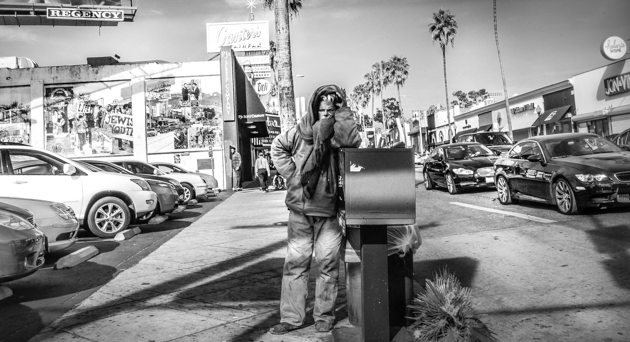
As she rested her elbow on an old L.A. Weekly newspaper bin, she continue to smoke from a stubby discarded cigarette.
She then tells me,
“I have more than once made contact with the pavement and it wasn’t so gingerly either, the last time was at the corner of Fairfax and Beverly.”
“She paused, took the last drag of her cigarette and dropped it on the concrete between her battered boots, strange how the world looks from the ground up, I once saw an ostrich too……. all well…. life has no obligation to give us what we expect.”
Heather Newman is the founder and CEO of Creative Maven, a virtual marketing consulting firm that brings c-level strategy, inspiration and creativity to marketing teams, startups, enterprise businesses and individual artists. She has produced thousand of events, campaigns and experiences in the high-tech and entertainment industries. She is also the Co-Founder and Chief Marketing Officer of Content Panda, a high tech business dedicated to creating products that deliver a superior user experience that drive value to businesses. She is also a Microsoft MVP for Office Apps and Services.
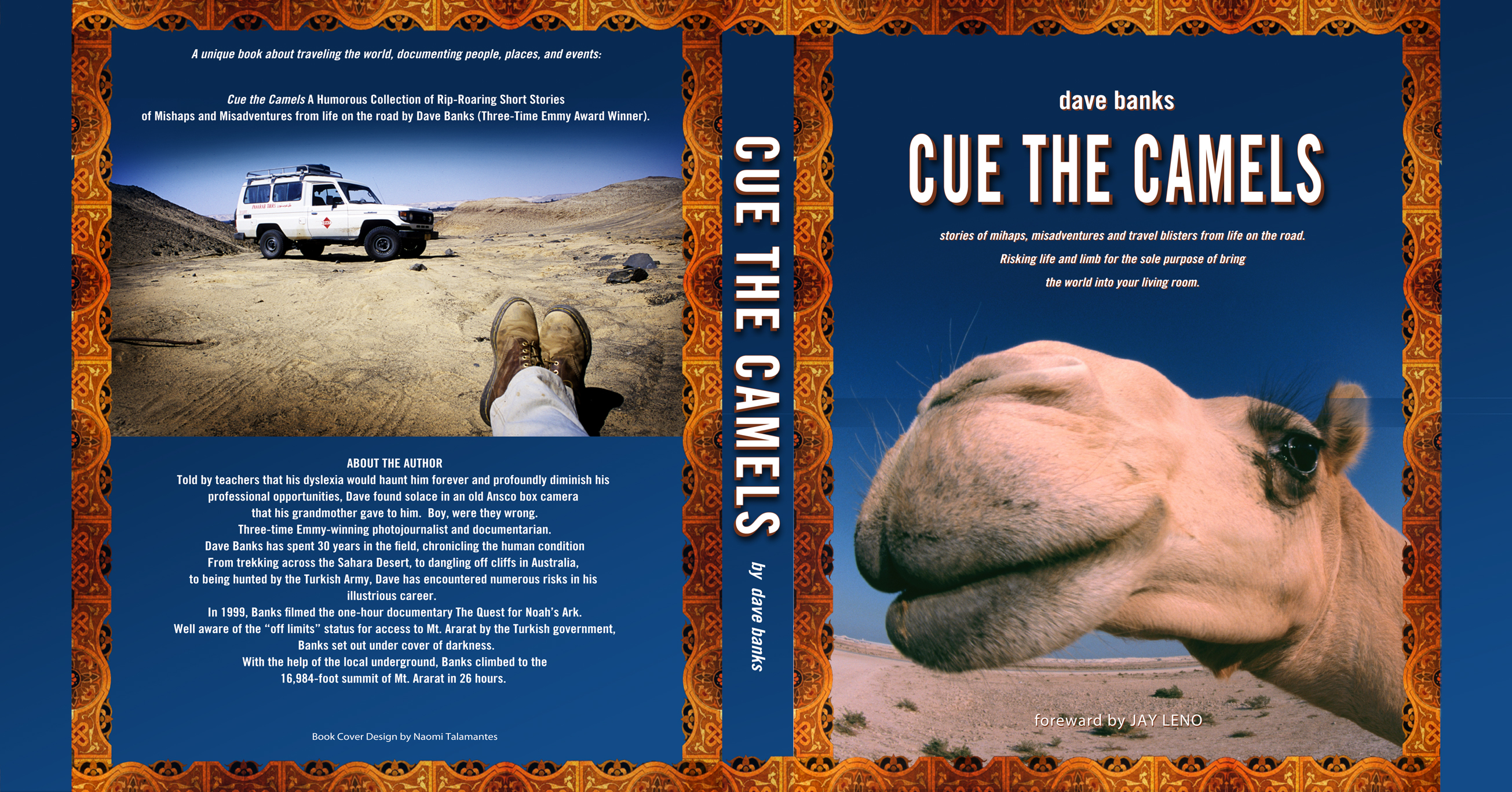
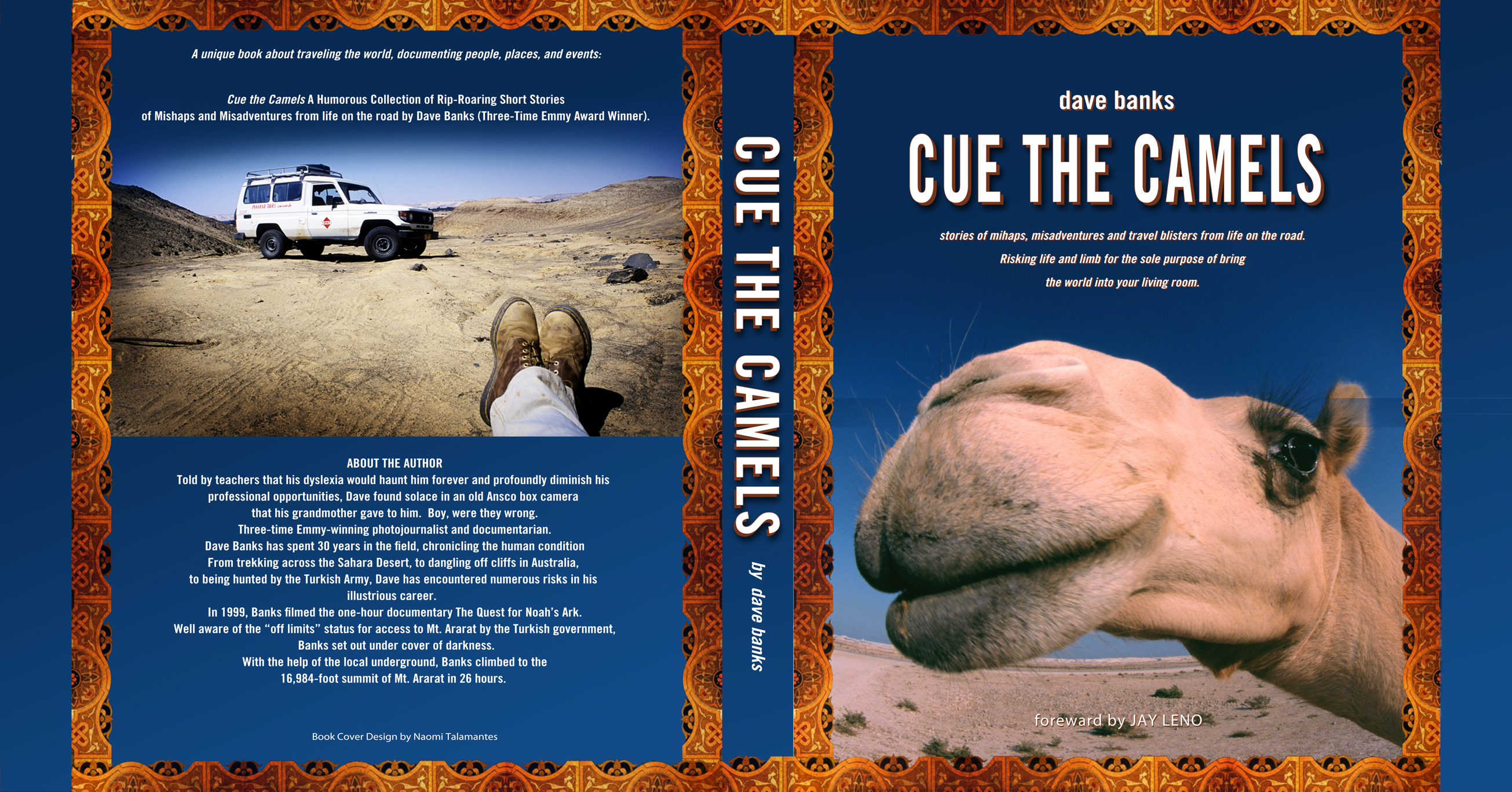
In this episode Heather interviews Dave Banks, award winning documentary film-maker, writer, and photojournalist. Tune-in to hear their conversation on: “I knew the struggles.” – Growing up with a single working mother inspired Dave to get involved with the Women’s Movement and how he uses his connections to amplify the message. “Life in the City of Angels” – Dave’s passion for sharing stories with his work and the books he is working on. “Nobody really knew what dyslexia was.” – How Dave’s struggle with dyslexia as a young man and an understanding teacher led him to photography and documentary filmmaking. “There’s this world over here that they’re not talking about or discussing.” – Dave’s observations as a freelance photo journalist at Standing Rock and the Middle East on how the mainstream news media is failing to deliver real news. “I kinda fell into it.” – How Dave’s work on the Wide World of Sports at ABC led him to work as a freelancer in the Middle East and his experience with PTSD. Visit mavensdoitbetter.com for full show notes, transcripts, and more.
 “If you don’t know where you are going any road can take you there”





 Exposure and Other Worldly Morsels