 Beirut L.A., Chapter 4, Cue the Camels Book
‘Scenes of rape in the arroyo, seduction in cars, abandoned buildings, fights at the food stand; the dust, the shoes, open shirts and raised collars, bright sculptured hair’
~ Latino Chrome lyrics by Jim Morrison, The Doors
Prologue
On April 29, 1992, twelve jurors in Simi Valley, California, delivered their verdicts in a controversial case involving the 1991 beating of Rodney King by four LAPD officers. The case received international attention when grainy footage of the officers’ attack on King was televised and it became a national scandal. The beating would never have been seen had it not been for George Holliday, who grabbed his video camera and stepped onto his balcony when he was awoken by sirens.
The verdict was read: all four officers were acquitted of excessive force and cleared of all charges. Due to the extensive media coverage, the public received immediate news of the verdict. Reaction in Los Angeles was swift as people began venting their anger. L.A. became a scene from a war movie, albeit one far from the facade of a studio.
The following night I picked up an assignment for CBS news to cover film director Spike Lee’s speaking engagement at the University of California in Irvine. The timing was ironic; following the King beating and the LAPD officers’ verdict, it was day two of the rioting. Spike was to talk about his new film ‘Malcolm X’. Irvine is about 45 miles south of Los Angeles, in the county famed for its oranges. Spike never made it; the announcement was made in the UC auditorium that, as a result of an upsurge in violence in L.A. and due to an exodus of traffic causing congestion on the freeways, Mr. Lee was unable to attend his engagement.
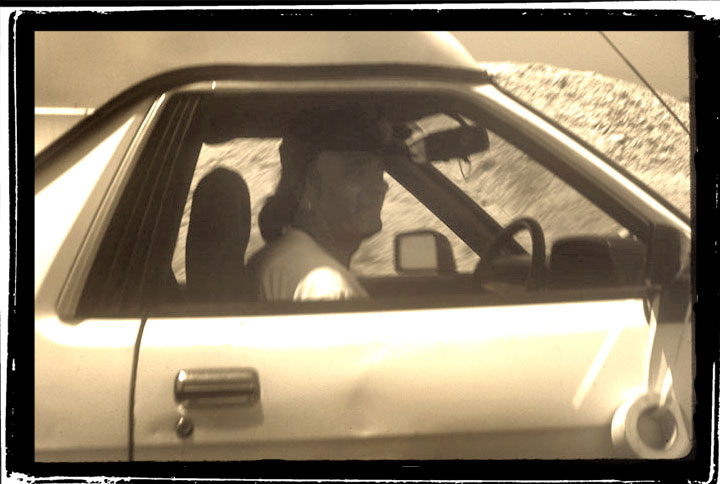
I’d taken the precaution of renting an Oldsmobile Cutlass Ciera; my 1978 Volkswagen Bus just didn’t have the speed or the protection for riding around the city of Los Angeles under such challenging circumstances and against brutal violence.
I packed up the camera and rushed back to L.A., heading north on the 405 freeway. It had been closed and was therefore free of traffic by the time I neared Los Angeles International Airport (LAX). With no police scanner to monitor the situation, I listened to KFWB news radio for leads, following police vehicles, helicopters and fire trucks that may have led me to riot hotspots. From their reports, I deduced that the worst fires and looting were taking place in central Los Angeles. At the interchange I took the on-ramp to the Santa Monica freeway that sits high above the ground on concrete columns. This gave me a spectacular view of L.A.’s cityscape – it stretched out before me, hundreds of dark gray smoky plumes spiraling upwards to meet the black sky. I could smell the distinctive stench of burning asphalt shingles, wood and rubber. Jesus! It’s Beirut L.A.
Lingering in the night, like a string of Christmas tree lights, were several police and news helicopters, their distinctive red and green pulsing taillights circling where civil unrest seemed to be worst. Known on the streets as Ghetto Birds, the LAPD helicopters sliced the darkness with their powerful searchlights on fixed points of unrestrained violence as media helicopters converged, scavenging on the carcass of a ravaged city. Above the helicopters were processions of commercial airliners with white lights making their final approach to land at LAX; the passengers looking down below were witnesses to a city gone mad.
Speeding along at 144 k.p.h, towards central L.A., I passed a huge house fire. ‘There’s a man on that roof!’ I shouted to anyone listening. I braked, leaving skid-marks and burnt rubber on the freeway, shifted into reverse and backed up to a suitable point to evaluate the scene. The silhouette of a man with a garden hose looked cartoonish against a wall of yellowy-orange flames. The sound of wood beams splitting from the heat of the fire rang in my ears. I grabbed my camera and rolled the tape, capturing the man as he moved back and forth, dousing the roof with water. I was eighty feet away, but I could still feel the heat as the building cooked.
Mesmerized by what looked like a wasted effort on the man’s part, his hose spraying out little attack towards the ferocity of the fire, I was unnerved by the sound of something whizzing past my ear. I heard the air split wide open as the hissing of a bullet passed by, followed by the sharp cracks of gunshots. I reacted automatically, panning the camera over to where the sounds were originating from when another shot was fired. Shouting began and a car peeled out onto the street below me. I had no idea if I was the target but I managed to get it on tape. I continued shooting film throughout the night, and it was only when I was filming a mass arrest of looters at a Von grocery store that a voice from behind me reminded me of my vulnerability.
‘You better watch out, cameraman.’
I paused. I didn’t want to press my luck so I packed up and drove to CBS Television City in the Fairfax District and licensed my footage to CBS news. The Oldsmobile, I returned without any damage.
April 30, 1992: President George W. Bush announced that he’d ordered the Department of Justice to investigate the possibility of filing charges against the LAPD officers, for violating the federal civil rights of Rodney King.
August 4, 1992: A federal grand jury returned indictments against Sergeant Stacey Koon and Officer Laurence Powell, both guilty of violating Rodney King’s constitutional rights, with an additional count against Sergeant Koon of willfully permitting the other officers to beat King.
Nearly six months later, on February 25 1993, the trial began in the courtroom of Judge Davies, on the charge of violating the civil rights of Rodney King.
April Fools Day, 1993: Expecting that history would most likely repeat itself, all local, national and international news outlets were gearing up to cover L.A.’s reaction to the verdict. I had been inundated by phone calls from news organizations to cover the event from the end of March. The booking I took was with the A.D. Production Company, the producers of the American Detective show that aired on ABC Network. I was on and off the phone throughout the morning with Mark, who’d produced the riot segment for American Detective.
‘Dave? This is Mark. We’re expecting a verdict soon on the King beating. If the cops are found not guilty there’ll be another riot. If they’re found guilty there may still be a riot. What’s your standby rate if a riot doesn’t happen right away? And do you have a gyro-zoom lens for the helicopter shots?’
Even though we’ve worked together for years, the business of booking has to be clear with very little negotiation; it is pay or play. For my services and for my camera, lighting package and audio gear, it runs to seven hundred dollars a day.
‘Well, Mark,’ I explained, ‘I’ll hold off until another job comes down. There’s no standby rate on my camera package, and yes, I have a gyro-zoom lens.”
There was a pause from Mark. I could hear talking in the background; I must have been on speakerphone.
Mark returned to our conversation. ‘Okay, okay. You’ll be positioned in the Special Enforcement Bureau command center of the Los Angeles Sheriff’s Department, in south-central L.A. You’ve also been given clearance to ride along in their helicopter.’
In my experience, I’ve always found it best not to get too excited about a standby gig, since most inevitably go away on the same day the production companies hire you. This led to the question: ‘Do you want me to ink the date in my diary or shall I use pencil?’
Mark replied, ‘Pencil. By the way, we’ve also hired you a bodyguard for if we reassign you to the streets. If that’s the case, your bodyguard is on the SWAT team of the San Jose Police Department. Oh, and do you have a sun gun light for your camera?’ Mark asked.
Taking notes, I replied, ‘It’s been my experience that a light on a camera makes for a good target.’
‘Oh, good thinking. Okay, we’ll see you on the 12th of April, Monday morning, at the Wyndham Garden Hotel in Commerce. We’ll also rent a bulletproof car, if we reassign you.’
‘How much is that going to cost you?’ I said.
‘A thousand dollars a day.’
I wasn’t surprised – you can rent anything in Hollywood. I called Bexel, the largest vendor of broadcast equipment in the country, to sublease some extra wireless microphones, a gyro-zoom lens and a wide-angle adaptor. I got hold of my friend, John Badovinac, who handled my rental account. ‘JB, this is Dave. Do you have…’ Before I could finish my sentence, John interrupted me.
‘Sorry, Dave, CBS has ten cameras and two gyro-zoom lenses and ABC has just rented what was left on the shelves.’
‘What? This is crazy. This is really crazy!’
‘We’ve rented out everything that has a lens. The networks and local stations are treating this trial as if it was the ‘84 Olympics.’
April 16, 1993: The federal jury convicted Koon and Powell on one charge of violating King’s civil rights. Sergeant Koon and Officer Powell received two and half years in prison. Officer Tony Briseno and Timothy Wind were found not guilty.
April 17, 1993: It was Saturday, 2:30 a.m. I was fully clothed and laid in bed, watching the re-edited version of Dune on television. I munched on another peanut butter Girl Scout cookie and sipped black coffee that was loaded with tons of sugar. I was in a hotel room at the Wyndham Garden Hotel, along with off-duty San Jose detectives and one ex-navy Seal, all of whom had been hired and assigned to me as bodyguards. They were armed to the teeth; the Seal was to drive our rented bulletproof Crown Victoria. Our team had been issued with flak jackets, Kevlar helmets, pepper spray and Israeli gas masks. Ironically, the instructions for the gas masks were in Hebrew which none of us could read.
Though I wasn’t upfront and close to the L.A. riots of 1992, I now had an official backstage pass to the ‘L.A Riots -1993 Tour’.
The decision was made to embed me within the Special Enforcements Bureau instead of a helicopter, in a platoon made up of thirty-six deputy sheriffs. We were to travel in sixteen marked patrol cars and one armored hostage rescue vehicle.
3:15 a.m.: The call came in to prep the gear, check out and travel to a new location. Dammit! Dune isn’t over and I’m going to miss the best part – where the giant sandworms appear to destroy the Harvesters mining on planet Arrakis!
In the hotel lobby I was informed that the production company had had second thoughts; they felt that the thousand-dollar-a-day bulletproof car was too expensive. They didn’t want to be held responsible for any ‘unnecessary’ damage. It looked like I was going to be riding in a deputy sheriff’s patrol car.
8:25 a.m.: We rendezvoused with several other platoons made up of uniformed deputies, in what appeared to be an abandoned hotel parking lot. I looked around the place: I saw some of the deputies relaxing in their vehicles while others paced outside nervously. No one was going to tell me how to behave or exactly what to expect. It was at that moment, as I distracted myself from such thoughts with a fruitless search for coffee, that I heard the verdict and sentencing of the defendants in the second Rodney King trial.
Several of the patrol cars had their trunks open with portable radios tuned to the KFWB news radio. The newscaster’s flat voice echoed across the parking lot, along with news of the war in Bosnia and Herzegovina, a nuclear accident in Russia, a fire-fight with the Branch Davidians in Waco, Texas, and a nifty review of Billy Crystal’s hosting of the 65th Academy Awards.
9:20 a.m.: The platoon relocated to a substation at the City Hall Complex in Lynwood.
11:25 a.m.: This was our first sit-down meal in two days. I was sitting in a plastic molded chair and table that had both been bolted to the floor. This was Angelo’s Burgers, a small fast-food joint at the corner of Imperial Highway and Atlantic Boulevard in Lynwood, California. As I ate my breakfast bean burrito and drank my second cup of coffee, I notice a handmade cardboard sign that had been written on with a magic marker resting on the counter where you placed your order. ‘Falling Down, with Michael Douglas, was filmed here on May 12th, 1992.’
It was at Angelo’s that Michael Douglas’ beleaguered character terrorized a fast-food chain called ‘Whammy Burgers’. I remembered his almost understandable motive for going berserk – the menu had progressed to lunch, and all he wanted was a little breakfast. In short, the movie was about a man in L.A. who went bonkers, so it was ironic that we were in Angelo’s with deputy sheriffs, having breakfast, whilst waiting for a city to go bonkers.
2:15 p.m.: Despite the announcement of the court’s verdict, this wasn’t what saw us race, at top speed, from Lynwood to an amusement park north of Los Angeles. A thousand tickets had oversold at a scheduled rap concert. Not surprisingly, some of the fans were upset and, out of frustration, had shattered the windows of restaurants across the street from the amusement park’s entrance.
4:35 p.m.: Boredom started to kick in. The deputies, our crew and assorted bodyguards were in a holding pattern at the upper entrance to the park. Everyone was hungry. With my supply of Balance bars and gum gone, all I had left was a bag full of Atomic Fireball jawbreakers, which I promptly started to throw at the deputies and production crew, shouting, ‘I’m coming!’
The production company eventually decided to get McDonald’s quarter-pounders for everyone. Halfway through the order, McDonald’s ran out of burgers, so most of the crew and the seventy-plus deputies ended up with Happy Meals. The Happy Meals came in red cartons and inside each was a toy action figure from Batman. A trade-off began between Batman, the Joker and Two Face, though it was Catwoman in her fitted gray costume that proved to be the most coveted.
7:46 p.m.: The sun set. I grabbed the Betacam and my Nikon camera and tagged along with a squad of seven deputies. We took in the sights and sounds of the park and I wondered to myself if we were going to stop long enough to get a corn dog. Occasionally, families and kids, looking for a way out of the park, stopped us and asked for directions. No one in our group was familiar enough with the park so we weren’t much help.
We’d not been in the park longer than fifteen or twenty minutes when there was a distinct change in the atmosphere. Instinctively, I hoisted the Betacam on my shoulder and removed the lens cap from my Nikon.
There was a lull in the night’s sounds. The normal carnival atmosphere had diminished; where laughter and the excited screams of kids on wild rides had filled the air just minutes ago, there was now just a low hum and relative silence. Something was happening. All of a sudden, there was a new sound – a differently pitched scream travelling through the air. It was a disconcerted screech that built in intensity, continuing until all the laughter had been swallowed. A swelling of emotion rose from my stomach, settling into my chest and heart.
Time seemed to shift then split, both streams working simultaneously. Different scenarios presented themselves in slow motion, while craziness was kicking off in the background in ‘quick time’. I was rolling tape and filming with the camera on my right shoulder while shooting stills using my left hand.
Like locusts swarming upon a field of grain, kids and families poured out of nowhere and surrounded us. The deputies reacted quickly, creating a circle in the middle of a concrete walkway. If you’d have looked down from overhead, you would’ve seen a circle of tan helmets surrounded by a sea of bodies with a sergeant in the middle trying to hear the two-way radio above the noise. One of my eyes was glued to the Nikon’s viewfinder when the camera’s motor drive whined with a ‘click-click-click-click-click’. Framed faces held expressions of dread, concern and confusion as the volume of pandemonium rose to an even higher decibel.
Somewhere in the park ahead of us panic struck like a flash of lightning. We caught the first swell of people seeking safety: a stampede of hundreds barreled right at us. What the crowd needed was a concrete wall, five-feet thick; we were but a mere fence of eight people. The crying, shouting and screaming escalated again. In the distance, ‘snaps’ could be heard. More screams from the stampede.
A deputy shouted, ‘Was that gunfire? WAS THAT GUNFIRE?!’
The mob receded a little, confusion filling the void. The milling crowd looked set to disperse; again, gunshots or firecrackers were heard somewhere in the park. A tidal wave of families, in sheer panic, descended upon us.
Unlike the 1992 riots, what was happening had an element of vulnerability from the families caught in the middle of a total breakdown of civil order. A group of teenage boys and girls ran up to us, screaming that one of the park’s security guys was getting beaten up behind us. We turned but couldn’t see anything other than a wall of bodies a hundred yards deep.
More deputies arrived from nowhere and we made our way across a sea of glass shards, white plastic coat hangers, price tags and paper images of cartoon characters. I filmed the sheriff’s helicopter as it flew overhead, its powerful spotlight shining down on the confused throng, creating massive shadows from the tree limbs and scaffolding which slowly crawled over the entire area like a black web. Looking through the black and white viewfinder the shadow looked ominous – almost alive.
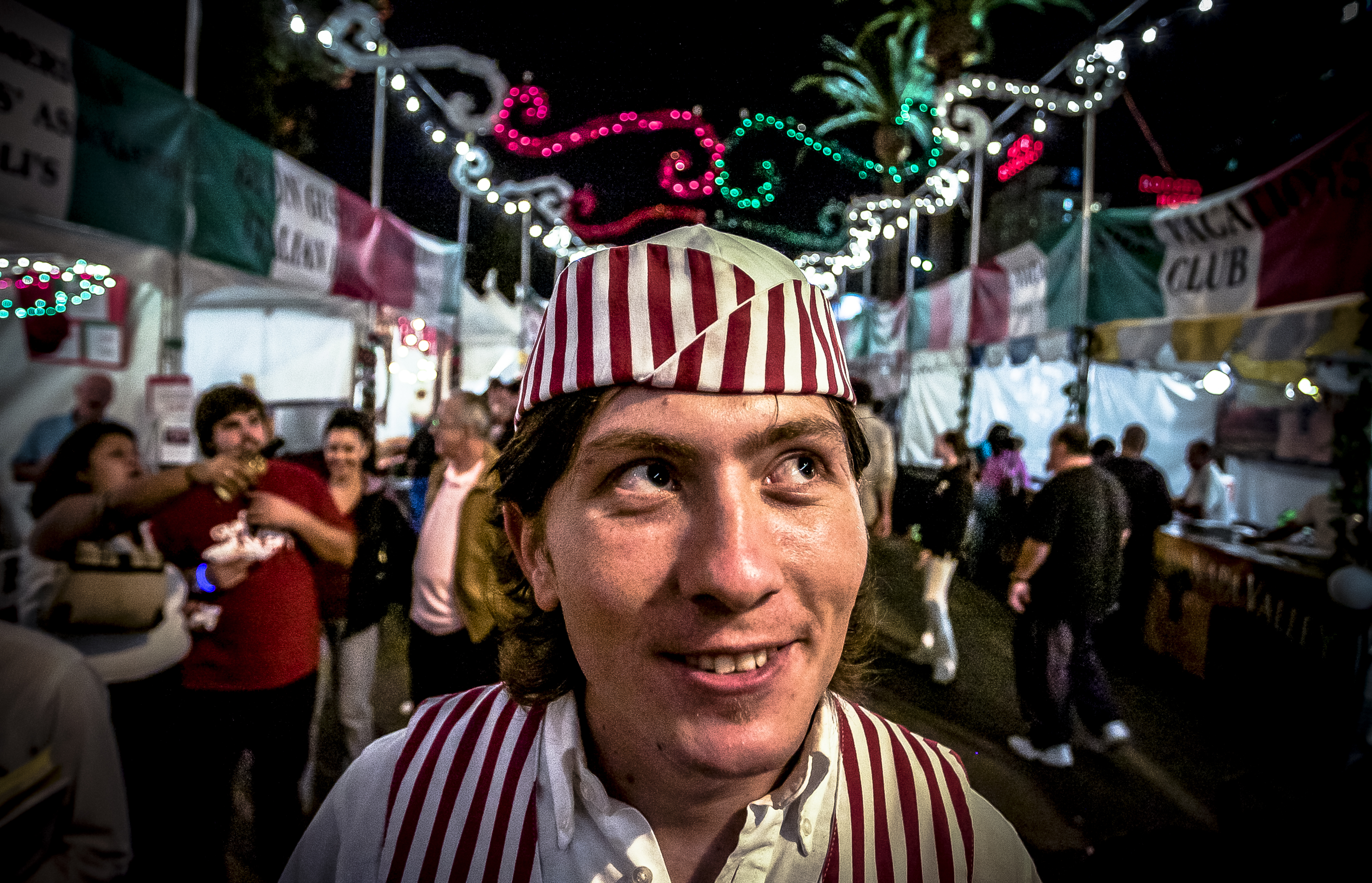
As we passed a restaurant, I noticed that the doors were cracked. I stopped to peer into the darkness. In the foreground were the legs of chairs, tables and serving trays stacked on top of each other. Beyond the barrier a young man, dressed in his chef’s hat and whites, stared at me with a dazed, anxious look. I rested the Betacam on the ground and wedged my Nikon lens between the doors, snapping off a couple of shots. I could only assume that he’d chosen to stand sentry, protecting his co-workers and guests with a fire extinguisher as the world beyond the restaurant door suffered a momentary lapse of sanity.
The park was now quieter as the deputies prodded the visitors, containing them in the main entrance. I passed a long line of kids at a pay phone trying to call their parents to come and get them. Nearby, I saw a marble statue of a rabbit on horseback waving goodbye to its guests.
April 19, 1993: I read that morning in the L.A. Times that the park reopened on Sunday to an enthusiastic spring break crowd as law enforcement officials, park managers and a music promoter tried to pinpoint blame for the melee that damaged both the park and its reputation as a place for family entertainment. An all-night repair job replaced broken windows and a restock of looted merchandise was completed in time for Sunday’s 10 a.m. opening.
I later learned that the ‘confused mass of people’ cost the park an estimated two million dollars in damages. Forty people were evacuated as an emergency, and it took 450 deputies to move 40,000 people out of the park.
Urban legend has it that a body was found underneath the Viper rollercoaster ride four days after the riot.
During the comedown, in showbiz news, there was a big buzz around the release of Steven Spielberg’s film, Jurassic Park, about a team of genetic engineers who created an amusement park full of cloned dinosaurs before all hell broke out. Sometimes, science fiction can be a little too realistic.
Within days I picked up an assignment to the Middle East. As sad as it sounds, I was well prepared.
Epilogue
June 17, 2012: Rodney King, the man at the center of the infamous Los Angeles riots, was found dead in his home in San Bernardino, California. He was forty-seven. According to media reports, King’s fiancée, Cynthia Kelly, found him dead at the bottom of a swimming pool. King recently marked the twentieth anniversary of the riots. Mr. King, whose life was a roller coaster of drug and alcohol abuse, multiple arrests and unwanted celebrity, pleaded for calm during the 1992 riots, in which more than 55 people were killed, 600 buildings were destroyed and the city suffered $1 billion dollars worth of damage.
August, 23, 2012: The autopsy findings by the San Bernardino County Sheriff’s Department, Coroner Division: The effects of the drugs and alcohol, combined with the subject’s heart condition, probably precipitated a cardiac arrhythmia, and the subject, thus incapacitated, was unable to save himself and drowned. There’s nothing in the history or autopsy examination to suggest suicide or homicide, and the manner of death is therefore judged to be an accident.
“People, I just want to say, you know, can we all get along? Can we all get along? Please….we can get along here.”
– Mr. Rodney King, May 1, 1992


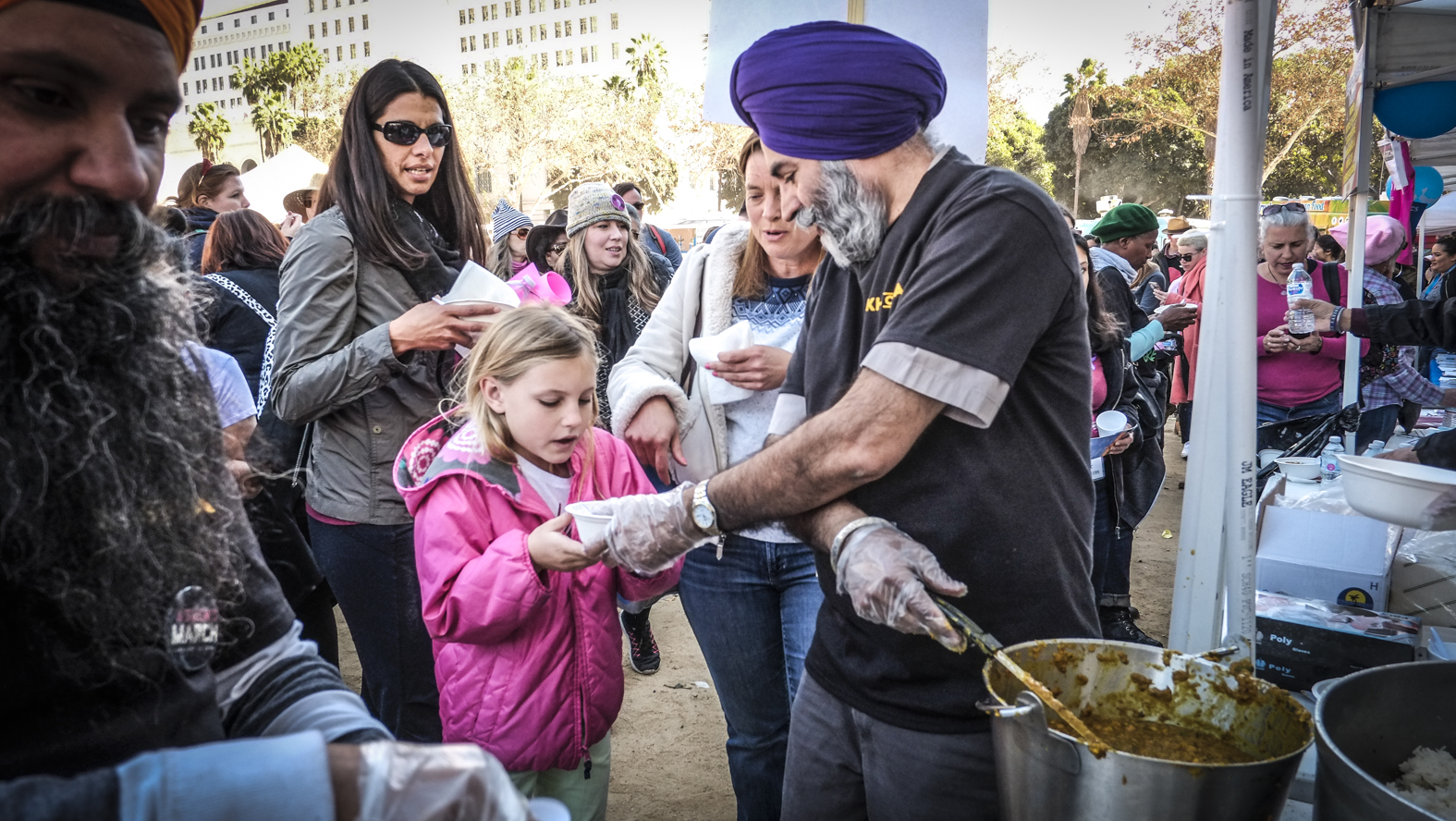 Sikhism preaches that people of different races, religions, or sex are all equal in the eyes of God. It teaches the full equality of men and women. Women can participate in any religious function or perform any Sikh ceremony or lead the congregation in prayer.




 Exposure and Other Worldly Morsels