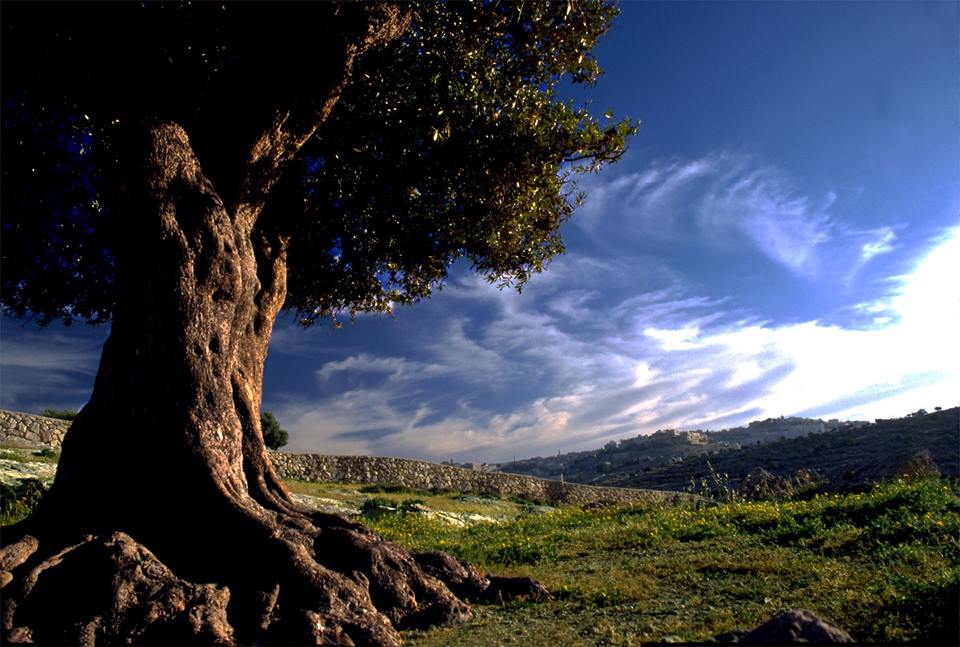
Palestinian Territory / Israel. The city on the hill is Bethlehem, this image was taken before the Israeli bulldozers destroyed the rock wall and the olive tree in the foreground. Then a concrete wall of 8 meters (26 ft) high was constructed in this Holy place. The West Bank “separation barrier” or “security fence” or “apartheid wall” or “anti-terrorist fence,” depending on whom you ask, is the largest infrastructure project in Israel’s history. Upon completion, its total length will be approximately 700 kilometers (430 mi). The annual costs is approximately $260 million to maintain the wall. It is said that “If the olive tree knew the hands that planted them, their oil would have become tears.”
Category: Journal
Crossing Borders: Calling All Angels
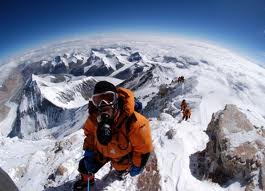 In mountaineering, there is a phenomenon known as ‘Summit Fever’ in which the heightened anticipation of summiting out weighs all reasoning. It is a step into the Twilight Zone where one’s critical faculties take a leave of absence and reckless decision making begins. The boiling frog story is often used as a metaphor for the inability of people to perceive significant changes that occur gradually – the premise is that if a frog is placed in cold water that is slowly heated, the animal will not perceive the danger and will be cooked to death.
In Jon Krakauer’s book Into Thin Air, he describes climbers so intoxicated by the drive to get to the summit that the common sense of survival gets discarded even when exhaustion, dehydration and bad weather becomes overwhelmingly evident – not to mention the absence of fellow climbers who have met their death.
Summit fever is not only limited to the tallest peaks in the world but can be found anywhere the human spirit is challenged- including the Sahara Desert.
It has been called the toughest footrace on earth, The Marathon des Sables. Competitors have described the event as running on the surface of the sun. The race is held each year in Morocco over six-days covering 254 km which is the equivalent to six regular marathons. Competitors must carry all personal belongings and food for the entire event in their backpacks. Water, tents and medical support are supplied by the race organizers.  During the 1994 race, Carabinieri (Italian police officer) Mauro Properi lost his way during a sand storm. Not wishing to endure a long drawn out death of dehydration, Mauro attempted to commit suicide in an abandoned mosque by cutting his wrists. The attempt failed – lack of water had caused Mauro’s blood to congeal the wound before the blood could escape his emaciated body. Nine days later he was found by a nomadic family and taken to an Algerian military camp. Mauro was nearly 200 miles off route.
Whether in the mountains, oceans or deserts for many adventurers the ultimate goal is to finish – at any cost.
” I think that if you see me crawling I might be in trouble, but until then I think I’m okay.” Triathlete Felicia Wilkerson, competitor # 378, Marathon des Sables.
What Happens in Vegas, Stays in Vegas
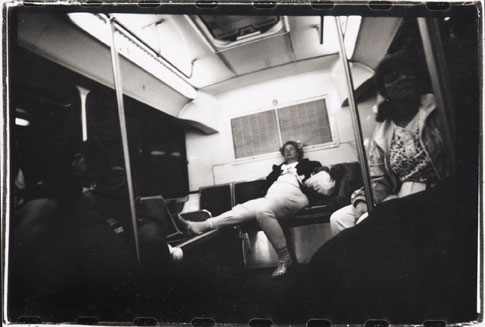 Asleep and protected from the desert heat and drunk predators, Donna finds refuge on a city bus in Las Vegas. She wears gold shoes with a white jump suit that is divided by a belt with sea shells glued to it. Donna’s hair is resting on the top of her head with a gold comb parked in front. She has grown accustom of sleeping over the sound of the diesel engine, air brakes and the frequent stops. Her head rolls from side to side with every turn the bus makes as it travels the back streets of Las Vegas. At first glance, Donna looks as if she has been shopping but the plastic bags are full of clothing and personal hygiene items which props her up right to a vertical sleep. The bags are her only worldly possessions.
 A black man sitting next to Donna stares out the window to the lights of the casinos and hotels. He clutches a paper bag. He has no rings on his fingers or a watch on his wrist. His attention is focused on the world outside the window. Here, they are both protected from the elements of Las Vegas and lost in their own world.
Life in the City of Angels: Blue Room

Seemingly unconscious of my presence there is a moment between silence and mid-note that my lens captures Randys silhouette. He rehearses, then pauses to contemplate a melodic and rhythmic pattern. He continues to rehearse filling the room with waves of invisible sentiment. To the ear its blues, cool, romantic and yet a feeling of expressing pensive sadness. The rehearsal room turns blue.
Life in the City of Angels: The Abyss at Norms Restaurant

A tattered piece of napkin is fused to the formica table top creating a semi circle from where the syrup dispenser sat. Frank’s forearm is momentarily glued to the table.
Frank fishes for an ice cube from his water and begins to mop the sugary halo.
The sound of leather and metallic tapping off the chrome base of the table escalates. Frank’s restless legs syndrome telegraphs his anxiety.
“Okay Frank, this is just between you and I…..okay?”
He nods yes.
“What I understand is that you can’t stop it or shut it down, you can only strap yourself in and go for the ride, you are no longer in the drivers seat. I hate to tell you this Frank. But your guardian angel is helpless and can only watch and maybe drop words of comfort and gently remind you in a sweet whisper that you are fucked my friend. You texted me that it started with awareness that your pill box organizer is not lying. Not that the medication is gone or forgotten but each container labeled with each day of the week is still full. It’s just not the loss of time but the loss of days. Is that right Frank?”
Again Frank nods yes. His hand trembles while still holding the ice cube.
“Frank, there are no magic beans here that is going to cure you. It’s a sad affair my friend. What can I do now while you are still cognitive?”
Frank’s eyes wonder over to the woman cashier as the line of customers grows while waiting for a table. He avoids eye contact with me as the truth of his situation becomes a reality.
Frank becomes aware that he is still holding the cube of ice.
“Frank look at me, what can I do to help you?”
Franks eyes tears up. He clasps his hands so tight that his knuckles turn white. Frank doesn’t know whether to be angry or heartbroken. The tapping of his foot grows louder from underneath the table and suddenly stops. Franks face becomes blank and pale as his emotions fade away. Receding and lost in the chasm of his mind, his soul is swallowed by the blackness of thought. Frank then disappears from the table leaving me to sit alone at the restaurant.
Crossing Borders: The Pause That Refreshes
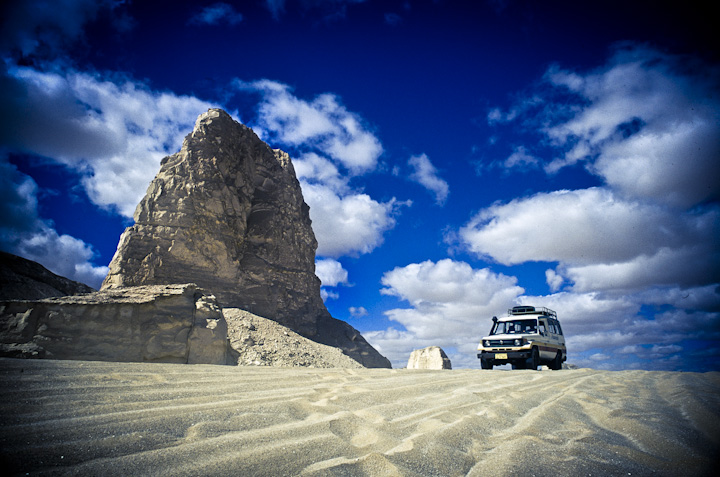
Somewhere in the Sahara Desert, The Pause That Refreshes.
Life in the City of Angels: Chinwag and Jay Leno

Life in the City of Angels: Karma Socks
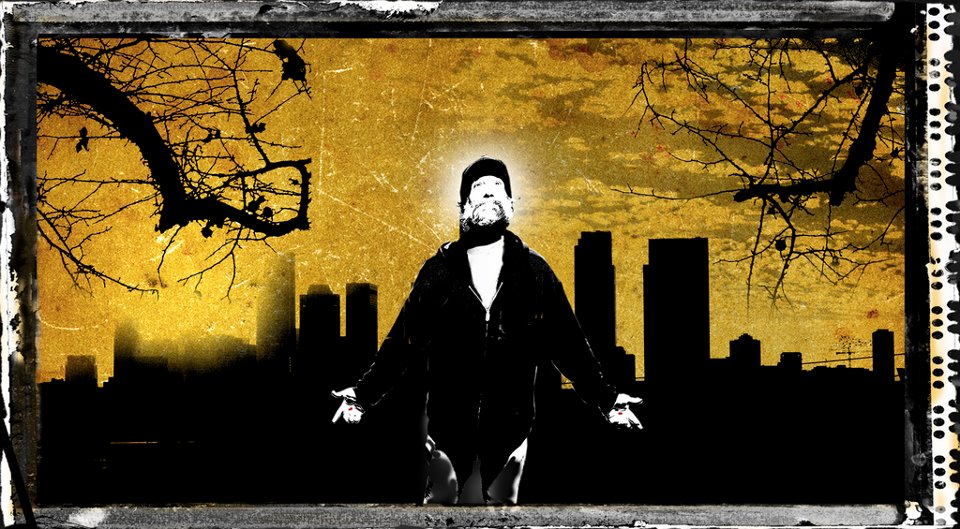
Karma (in Hinduism and Buddhism) the sum of a person’s actions in this and previous states of existence, viewed as deciding their fate in future existences: a buddha is believed to have completely purified his karma.
Have there been times that you find yourself in a muddy gray area that combines breathtaking views of the Twilight Zone with the morally ambiguous ambiance of being in limbo? Well, get out the Sage and smudge the hell out of your environment. This may or may not work for you. But at least you will feel proactive in getting yourself out of the muck of your existential crisis. This dread is when individuals question whether their lives have meaning, purpose, or value, and are negatively impacted by this contemplation. By no means do I listen to all the voices in my head. Some of those assholes have hidden agendas and they’re expert at disguising their motive… which is only to make me feel bad about myself.
Getting out of the doldrums requires putting some wind in your sails. What’s called for are challenges that shake things up. I seek pleasure during my stagnation by taking refuge in doing for others who are less fortunate than me. A trip to the Dollar Store and I’ll buy socks. I mean lots of socks. Maybe 50 pairs of socks, socks of all colors, dress socks, crew socks, leg warmer, knee-high socks, split-toe socks, nylon socks, cotton socks, whatever is available on the store shelf. Then drive to skid row and hand out the clean socks. Giving something tangible to another human being gets me out of my head. If karma is real, and I believe it is. Buddhists, especially if you fall in the category of Bodhisattvas then you know souls that have reached enlightenment but have foresworn Nirvana so that they might continue to be reincarnated and work to liberate all sentient being from suffering. In doing so I avoid taking a direct hit of slimy karma by changing in a very small way my immediate surroundings.
Cue The Camels: Rucksack Essentials: La Musica
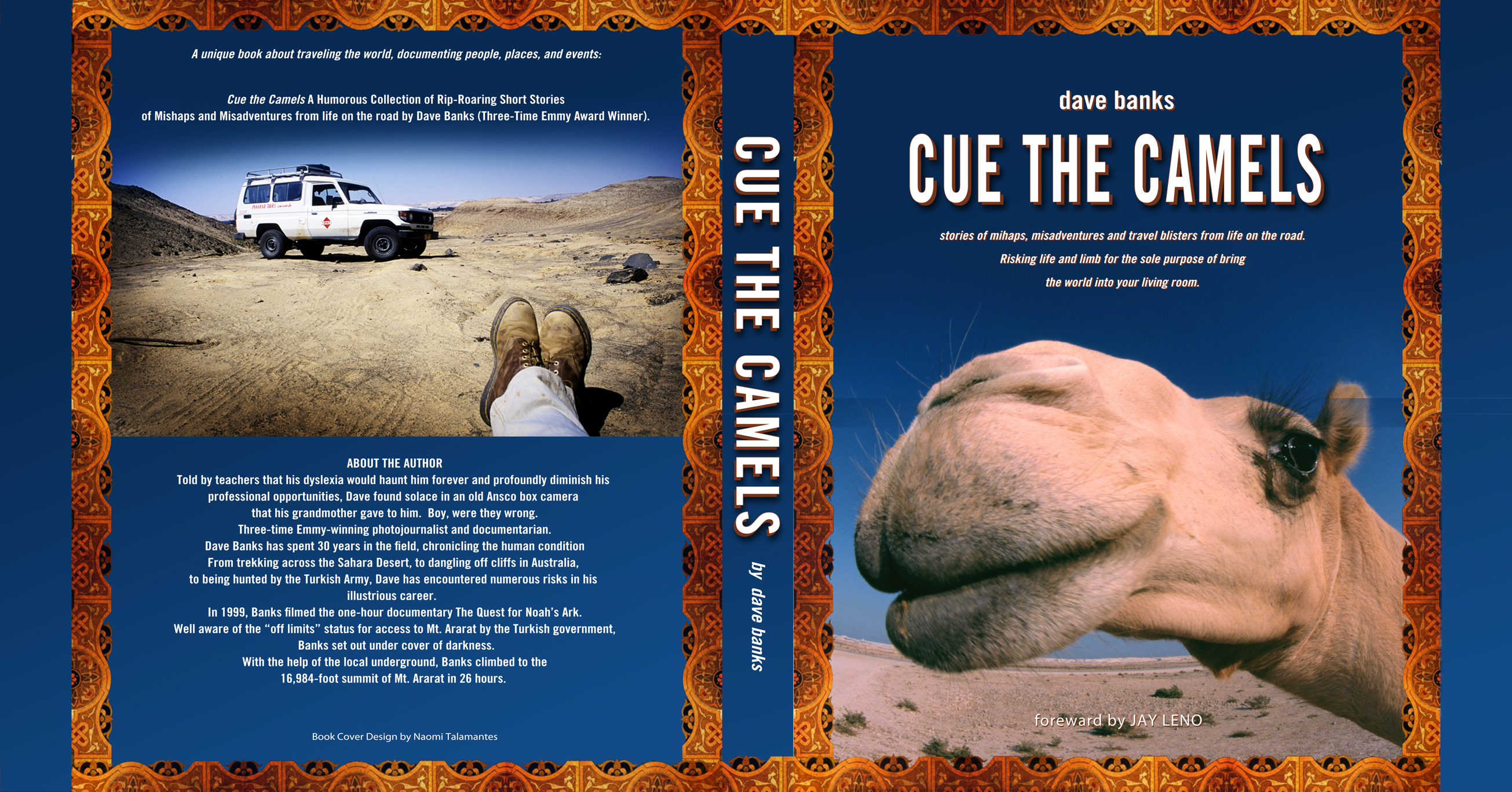
Chapter Six
Music is a safe kind of high – Jimi Hendrix
It’s not that I’m a snob about music but any world traveler will tell you that one of the most essential items in your rucksack is your music. My choice of tunes has become the soundtrack for many of my journeys, often saving my sanity. I can attest that there is nothing better then listening to your iPod on a transatlantic flight, it evokes a wonderful state of being that takes you away from the crying babies and exasperated mothers. Music has protected me from exasperation when Egyptian wedding parties have still been going strong at two o’clock in the morning, as well as helping me pass days (not hours) while once waiting for a flight out of Kabul.
For me, Justin Bieber’s mindless pop just doesn’t lend itself to the experience of tearing across sun-bleached sands in the Sahara desert in a Toyota Land Cruiser. The Clash’s ‘Rock the Casbah’, however, does a terrific job and always sets the mood. I have collected CDs from souks, bazaars, back alley kiosks and hotel lobbies; I’d like to think that, as a result, my taste in music is eclectic. You’ll find Middle Eastern dance, Bollywood, Japanese pop, electronica, soul, rock, tango and Neapolitan ballads on my iPod.
Like a still image, a song can transport you back to a moment in time that has been forgotten: a cognitive process that scientists have tried to understand for a long time. For instance, during the wild fires of southern California in 2009 I had a very real flashback when Shakira’s song ‘Whenever, Wherever’ blared out from the radio while I was driving along the Glendale freeway. Combined with the sight of the burning hillside, the fumes of diesel and the ‘thump, thump, thumping’ of the helicopters overhead I was immediately transported back to the Bagram airbase in Afghanistan.
I see music as a synthetic acid that enhances flashbacks of our memories. Scans of the brain have shown that when people listen to music, virtually every neuron becomes more active, which may explain how I’ve overcome a learning disability, dyslexia and attention deficit disorder. Music forces me to focus, which keeps my ADD at bay. Growing up, my parents could never understand why I would play music when reading or studying; they’d just shout at me to turn the record player or radio off.
Once I sit down and play my music I fall into a Zen-like state; my brain slows down to a crawl so that I can concentrate. If it were not for music I would probably be selling used furniture in Tulsa, Oklahoma.
In all societies – with the exception of just one, that I know of: the Taliban – music’s primary function is collective and communal, to bring and bind people together through singing and dancing, should their culture allow. Humans have been making music since those first cavemen’s campfires.
In Kabul, Afghanistan, I spent an afternoon eating lunch that had been cooked on the sidewalk, in front of a carpet store on Chicken Street. The owner and his son stayed and had lunch with me so that they could practice their English. When Kabul was under Taliban control, paper bags, white socks, kite-flying and music were forbidden. This was serious oppression; for instance, possession of a paper bag constituted the death penalty. If they viewed that so severely, imagine what they’d have done if a flash mob broke out to Survivor’s ‘Eye of the Tiger’ – the Taliban would have nuked all of Chicken Street.

To celebrate my host’s and his son’s newfound freedom we played ‘Jump Around’ by House of Pain on his chrome-trimmed ghetto blaster that he’d kept hidden from the Taliban. It must have been very amusing for the ISAF (International Security Assistance Force) troops to see a couple of Afghans and one big white guy jumping to the beat of the music in front of the old carpet store. To this day, when I hear ‘Jump Around’ I can smell the pilaf cooking, feel the heat of the day and, in my mind’s eye, see the physical expression of freedom on the owner’s face and that of his son’s, as they danced with sheer joy.
Prior to a shoot in Egypt I listened to singer Amr Diab which gave me some insight into modern Egyptians’ taste and a clever way to win over friends. I phonetically learned Amr Diab’s hit ‘Nour El Ain – Habiby’. Arabic was not a language I grasped quickly; I know a few phrases like ‘tiizak hamra’: ‘Your ass is red’ (i.e. like a monkey’s); or ‘moxxu gazma’: ‘His mind is (as low and dirty as) a shoe’, a bitter insult. Still, I persevered and mimicked ‘Habiby’ before leaving the States.
Once we landed in Cairo we immediately started shooting. On a production like that there’s not much time to build a friendly relationship with your Egyptian fixer, crew members or driver. Despite the language barrier, we were all very courteous to each other and worked together really well. On day four of the assignment, we were travelling from Cairo to Giza by van; Abubak, our driver, pulled a cassette tape from a black box that he was very protective of, because it contained his personal collection of music. I was in the back of the van as the Egyptian crew sat up front, smoking Cleopatra cigarettes. The intro began to ring out and I felt butterflies in my stomach. Amr Diab sang the first lyric. I stood-up (as much as I could in the van) and belted out, ‘Habibi ya nour el-ain, ya sakin khayali, a’ashek bakali sneen wala ghayrak bibali (translation: My darling, you are the glow in my eyes, you live in my imagination, I adored you for years, no one else is in my mind). I then sang the chorus: ‘Habibi, Habibi, Habibi ya nour el-ain’ (My darling, my darling, my darling glow in my eyes).
I swear to God, one of the crew member’s cigarette dropped out of his mouth, and I could also see in the rear view mirror Abubak’s eyes widen – he nearly rear-ended the Cairo taxi in front. There was a moment of shocked silence – this big white guy from California was singing one of their most popular songs. They began to clap in unison to the beat of the song; one by one they stood up and held their hands high, swaying their hips, as we all sang ‘Habibi, Habibi’. The remaining seven days of our shoot were flawless. Every evening we came together and smoked shisha, played dominos and learned curse words in each other’s language. At the end of the shoot, and before checking in for the flight back to the States, we all stood in the Cairo International Airport parking lot to say our goodbyes and so I could pass out their payment and traditional bonuses. I noticed Abubak walk from the cab of his van with something wrapped in newspaper. He presented me with a gift: my very own hookah and shisha. Surrounded by the Egyptian crew, tears filled my eyes as I accepted their gracious offering. We’d become as close as brothers through our common love of music. As we said our goodbyes I couldn’t hold it in any longer and I openly sobbed as I hugged each of the big, burly, bearded men. They, too, began to weep as I walked away and boarded my flight.
I missed out on securing a bulkhead seat in coach and found myself wedged in a middle seat at the back of the plane. The seat had only enough space for a tiny derriere, which I don’t have – I swear, my toilet seat back home in Burbank was bigger. My legs were cramped up against the gray folding tray hanging from the seat in-front of me that refused to stay up, which seems to happen on every overseas flight I take. I should file a report to Amnesty International that United Airlines commits acts of torture by kneecapping captive consumers.
The in-flight movie was one I’d seen before: a chick movie, ‘Sleepless in Seattle’. It was time to escape into my world. I settled myself as much as I could by placing a pillow between my knees and the seat in-front of me. With my earplugs in and my iPod tuned to my favorite artist, Natacha Atlas, I opened a dog-eared page of my book: The Teachings of Don Juan, by Carlos Castaneda. Having lived in the Sonoran desert of the American southwest, and after working in the Sahara desert, I have an affinity with space, sand and time. As an anthropologist, Castaneda wrote that Don Juan Matus, a Yaqui Indian and shaman, was an expert in the cultivation and use of various psychotropic plants, (specifically, magic mushrooms, angel’s trumpet and peyote) all found in the Mexican deserts. While under their influence, Castaneda reached a transcendental state. At cruising altitude, with the monotone whine of the jet engines and the murmurs of fellow passengers, Natacha’s song, ‘Ya Weledy (My Child)’ began and I hoped to gain similar escapism. The music then turned to an Arab symphony; in my mind a curtain rose and I played back the last few days with my Egyptian friends as Natacha sung: ‘Don’t forget your friends, don’t forget your friends. And those who think of you, and those who think of you, you don’t know what is in front of you. Don’t stray from the path.’
My own hypnotic drug – my music – was starting to kick in and I felt serenity, wedged inside my seat miles from the ground, incarcerated in a metal box. The track changed to Anthony Newley’s ‘What kind of fool am I?’ and I had a vivid flashback of my friend, Ya’akov, whom I worked with in Israel as we searched for a money shot….
*****
The passenger window next to me was tinted yellow from years of exposure to cigarette smoke. Running down the middle of the window was a vertical crack in the shape of lightning; it was stuck halfway which allowed a blast of hot air to penetrate the cab, bringing with it familiar smells of diesel and earth. As the terrain charged by, I idly wondered which biblical figures had walked this ground, and which battles from the Old Testament had been fought there. But it was difficult to ponder such searching questions when my Israeli driver, Ya’akov’s, radio-cassette player screamed ‘What kind of fool am I?’
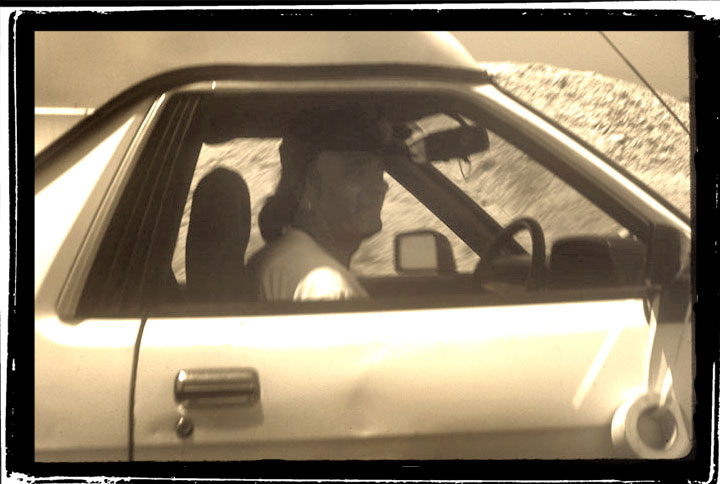
With both hands on the wheel, and an ever-present Marlboro dangling from his lips, Ya’akov belted out the tune, over-enunciating each lyric. A man of small stature, Ya’akov was built like a brick house, with hands like baseball gloves and eyes blue and clear.
For some, pop music is considered to be the demise of civilization but for Ya’akov, it was a blessing. Ya’akov embraced western culture by teaching himself English from the Billboard’s Hot 100 music chart – it was the reason why he strained so hard to pronounce each lyric. Although his accent was definitely Israeli, it switched to a bad Elvis impersonation when he cursed aloud, such as when the undercarriage of his truck scraped the limestone rocks in the road. He also had difficulty with slang, such as when we referred to the ‘walkie talkies’ we used on location. He called them ‘okie dokies’. So used to his description, I still find myself calling them ‘okie dokies’ even now.

Ya’akov relayed his military service history during our trip. He was a veteran of the Six-Day War and witnessed Israel’s history from the front lines. He added that the Beatles released ‘Sgt. Pepper’s Lonely Hearts Club Band’ only days before the battle. He especially liked ‘When I’m 64’.
It was May 1967 when the Egyptian president, Gamal Abdel Nasser, expelled the United Nations’ Emergency Force from the Sinai Peninsula, including the Suez Canal. Egypt subsequently blockaded Israel’s southern ports of Eilat and the Gulf of Aqaba, preventing shipments of Israel’s oil imports. Nasser also had a strategic alliance with Jordan and Syria, with additional military support from Iraq, Saudi Arabia, Sudan, Tunisia, Morocco and Algeria. Egypt had amassed a thousand tanks and nearly a hundred-thousand soldiers on the Israeli border. On June 5, 1967, Israel launched a pre-emptive attack against Egypt. Ariel Sharon commanded the most powerful armored division on the Sinai front, which Ya’akov’s unit was part of. Ya’akov, a machine-gunner, fought in that battle, but not before his unit was held back due to landmines and Egyptian tanks. I can only imagine that while he waited for the orders to move out, Ya’akov was drinking coffee, smoking cigarettes and hoping to make it to 64.
General Sharon broke away from his plan of attack and ordered his troops to follow a camel path through the sand dunes, thus avoiding thousands of landmines and with the intention of surprising the Egyptians. Ya’akov was happy to have just survived the war. He now drove film crews around Israel and sold cartons of Marlboros to the Bedouins.
We were on an old dirt road, somewhere off Highway 79, near Nazareth. Ya’akov maneuvered around bombshell-size potholes; his truck, filled with our camera gear, swayed almost rhythmically to the cassette player. The goal was to find an appropriate filming location in the Israeli outback, one without power lines or any evidence of the twenty-first century. I let my driver – and serendipity – find the money shot.
The first time ‘happy chance’ occurred was when I shot a documentary about the Dead Sea Scrolls. We’d traveled to the cave in Qumran where the scrolls were found by a Bedouin shepherd in 1947. With that segment of the documentary done, and with no further obligations, I put my headphones on and succumbed to Esquivel (which is great travel music). I let fate and inevitability take us down unmarked dirt roads. Hidden away were miles of beautiful, sweeping terrain, perfect for shooting stills and B-roll for the documentary. Since that shoot it has become a ritual to wander aimlessly about our location.
True to this tradition, Ya’akov found a spot and pulled over. He got out a small backpack stove and proceeded to make us coffee. We sat on the back tailgate, smoking cigarettes and stirring our thick, black coffee.
‘Ya’akov,’ I said.
‘Yes, David?’
‘How about another song?’
Without blinking, Ya’akov bellowed, ‘In-a-gadda-da-vida, honey, don’t you know that I love you? In-a-gadda-da-vida, baby, don’t you know that I’ll always be true?’
As he stood in the middle of the old dirt road in the outback of Israel, Ya’akov mimicked playing a Vox organ in D-minor while belting out his tune. ‘Jesus,’ I thought, as I recognized the melody by Iron Butterfly. And then it hit me: the song came out in May of ‘68, right after the dust settled from the Six Day War – around the time Ya’akov started learning English.
As the sun set and Ya’akov rolled out the hits, there was nowhere I would rather have been. I shouted out, ‘Hey, Ya’akov…hand me your okie dokie. I’ll charge it for you.’
My Mom
When those moments of her absence lay heavy on my heart I’m thankful for this video. It’s a wonderful memory of her humor, charm, and candor. I miss you mom.
Sept. 20, 1925 – Nov. 6, 2020 RIP
 Exposure and Other Worldly Morsels